Loading...
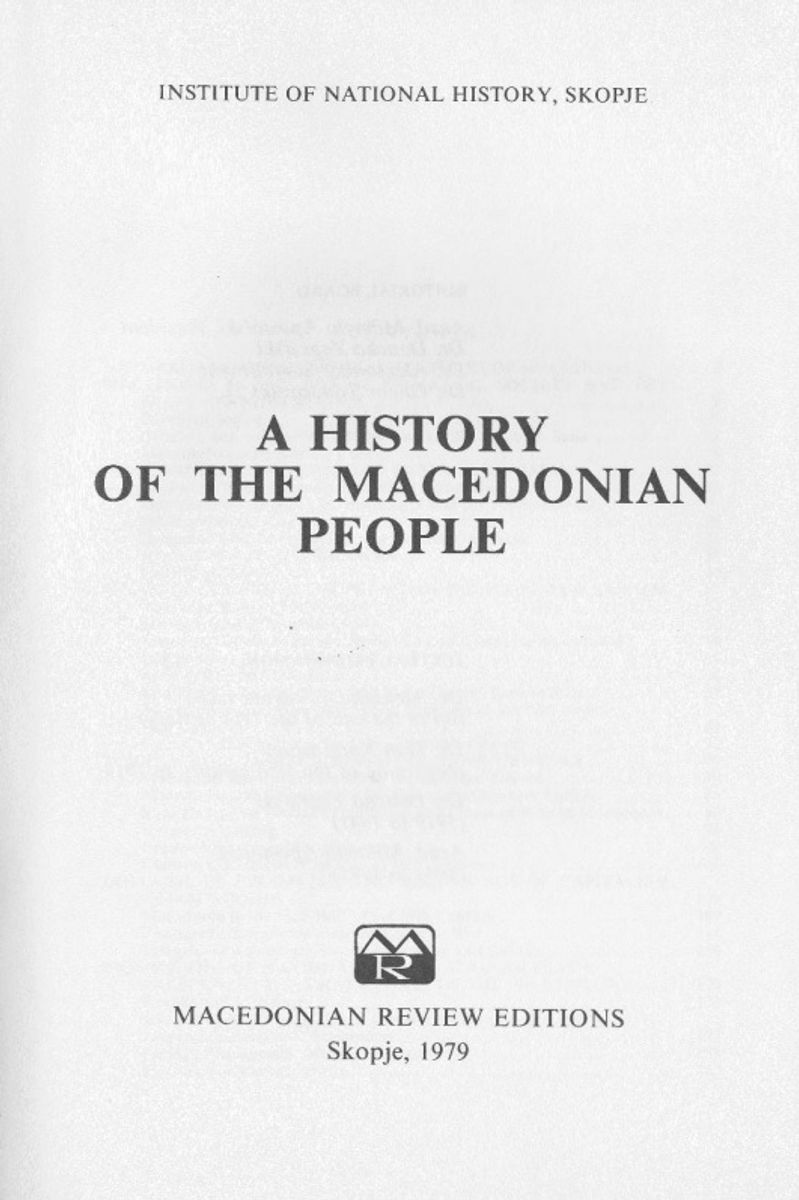
1979
Англиски
Историја на македонскиот народ
Пристап до книгата
Опис
A History of the Macedonian People is organized into broad historical periods.
It begins with antiquity, presenting ancient Macedonia as the cradle of a distinct people, highlighting the kingdom’s rise under Philip II and Alexander the Great, and linking this heritage to modern identity. The medieval section covers the Byzantine and Bulgarian Empires, the Slavic settlement, and the cultural flowering of the Ohrid literary school, portraying these as integral to Macedonian continuity. Under Ottoman rule (15th–19th c.), the narrative emphasizes economic hardship, religious pressures, and the preservation of folk traditions as foundations for later national revival. The national revival and revolutionary era details the 19th–early 20th century awakening through schools, literature, and the Ilinden Uprising of 1903, framing these as steps toward sovereignty. The 20th century chapter covers the Balkan Wars, the interwar period, WWII partisan struggle, and the establishment of the Socialist Republic of Macedonia within Yugoslavia, concluding with its political, cultural, and economic development in the postwar era.
Overall, the book constructs a continuous, unified historical arc from ancient times to the modern state, reflecting the official historiography of the period in which it was written.
За институцијата
Institution