Loading...
1928
Српски
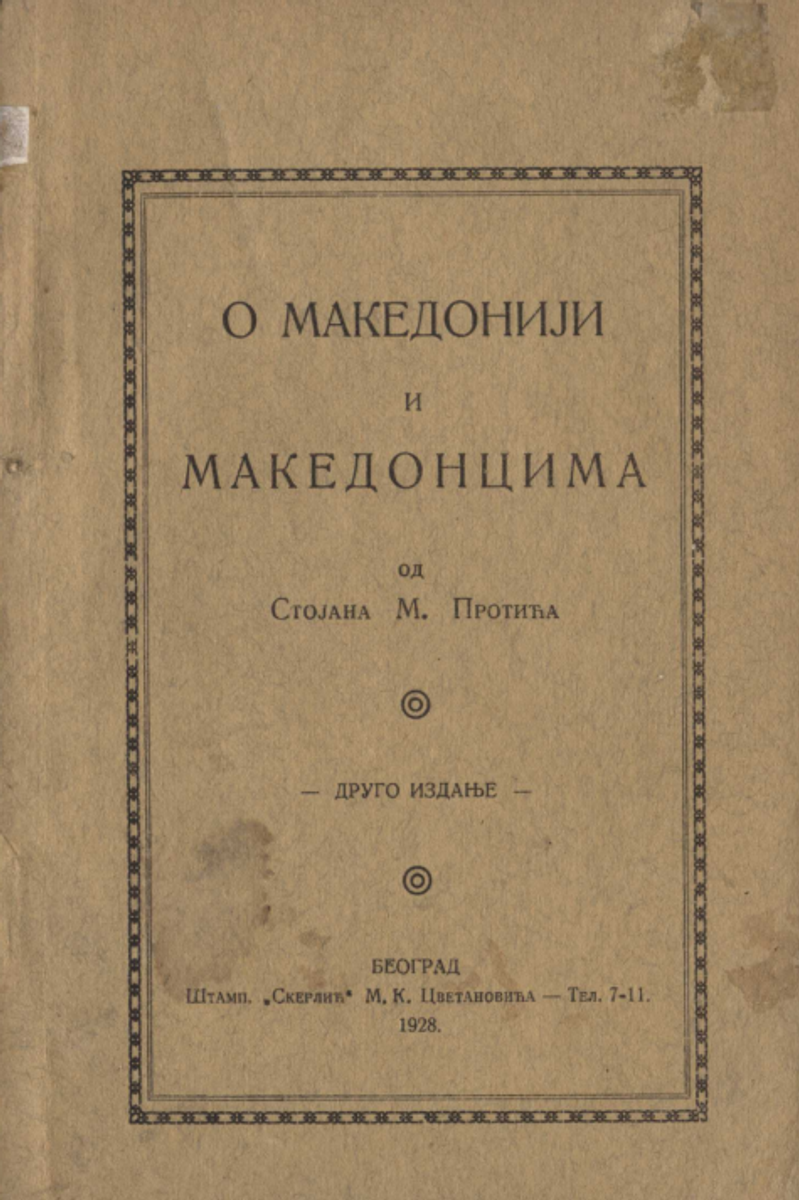
За Македонија и Македонците
Пристап до книгата
Опис
"For Macedonia and the Macedonians" is a book by Serbian politician and journalist Stojan Protić, published in Belgrade in 1928. Protić explains that the book was written as a response to the ongoing dispute between Serbs and Bulgarians over Macedonia, which he claims was initiated by Bulgarian "exaggerated tendencies and demands".
Protić highlights the work of Vuk Karadžić, a key figure in modern Serbian literature, who was one of the first to introduce the Bulgarian language to the academic world. The author notes that Karadžić, in his 1822 "Supplement to the St. Petersburg Comparative Dictionaries," included some Bulgarian folk songs and a grammatical overview. However, Protić emphasizes that Karadžić himself admitted to not knowing the Bulgarian language well at the time and even corrected some of his initial observations, such as the absence of an indefinite verbal form in Bulgarian. Protić also points out that Karadžić believed many of the Bulgarian heroic songs were actually "Bulgarized" Serbian songs, a claim that was also admitted by some Bulgarians at the time.
The book also delves into the history of the Bulgarian National Revival and the establishment of the Bulgarian Exarchate. Protić details how Bulgarian intellectual and political movements, supported by Russian interests, began to develop literary societies and newspapers in cities like Odessa and Bucharest. The author points to the Odessa Bulgarian society as a key agent in this, mentioning that its leader, N. Palauzov, tried to convince a Russian general during the Crimean War that Macedonia was populated entirely by Bulgarians. The book also details how the Bulgarian Exarchate was established by a Sultan's decree in 1870, covering specific dioceses. Protić concludes by quoting V. Jagić, a professor of Slavic studies, who characterizes the new Bulgarian literature not as true literature, but as various "patriotic cultural movements".
За авторот
Author