Loading...
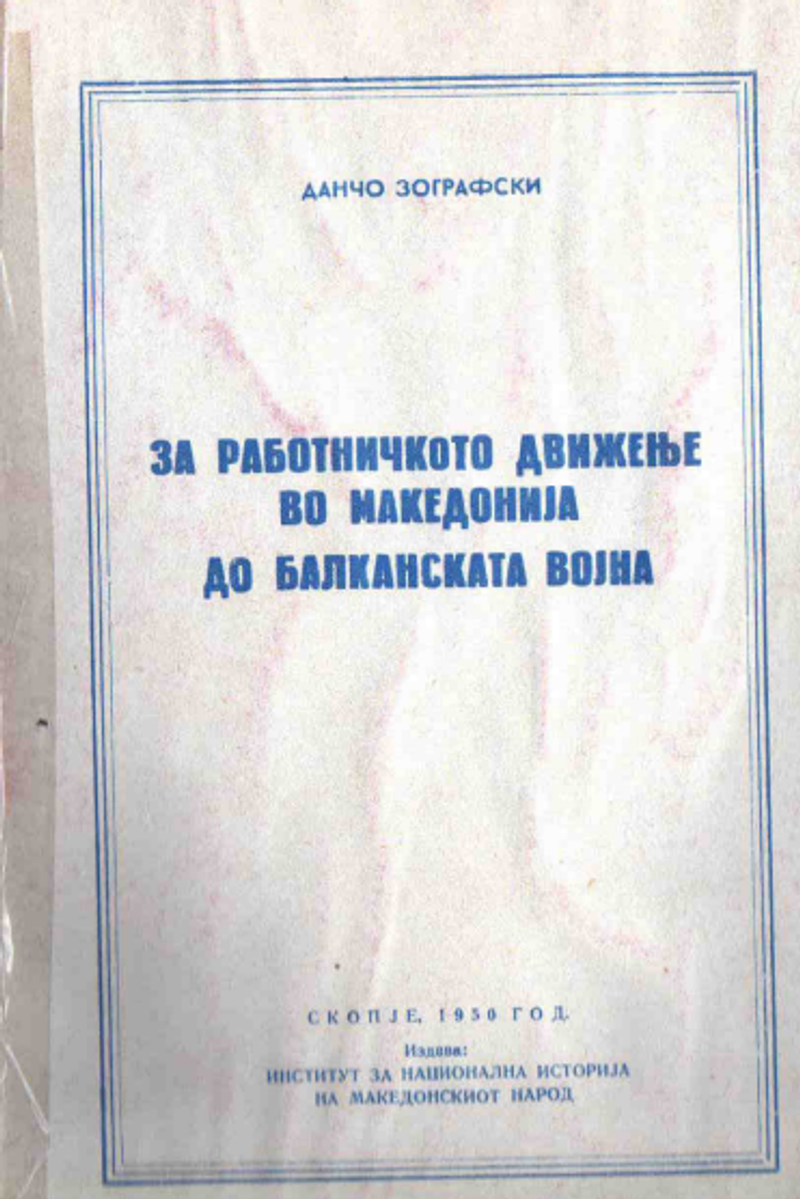
1950
Македонски
За работничкото движење во Македонија до Балканската војна
Дела од Данчо Зографски

Пристап до книгата
Опис
Dančo Zografski's "For the Workers' Movement in Macedonia Until the Balkan War" (1950) explores the origins and development of workers' and socialist movements in Macedonia. The book highlights the difficult conditions faced by the movement due to slow capitalist penetration and the enduring feudal system under the Ottoman Empire. European capitalism eventually spurred economic changes, leading to a crisis for local artisans as markets were flooded with industrial goods.
The Turkish feudal system evolved into "chifligarstvo" (system of land ownership and management) absorbing small peasant landholdings and transforming free peasants into tenant farmers and laborers. High taxes and debt forced many peasants to abandon their land and seek work in cities or abroad. European capitalists invested in Macedonian industries, drawn by cheap labor and low raw material costs. This new industrial sector employed impoverished artisans and landless peasants.
The book also addresses political obstacles, including nationalist propaganda from neighboring Balkan countries. The first part details the economic and social plight of Macedonian peasants under Turkish rule, characterized by a military-feudal order and administrative chaos. Peasant conditions worsened in the 17th century due to wars and increased trade with Europe, leading Turkish feudal lords to prioritize agricultural production for profit. This resulted in direct exploitation of rural areas by cities through monopolistic pricing and burdensome taxes.
За авторот
Author
Данчо Зографски(1920 - 1997)