Loading...
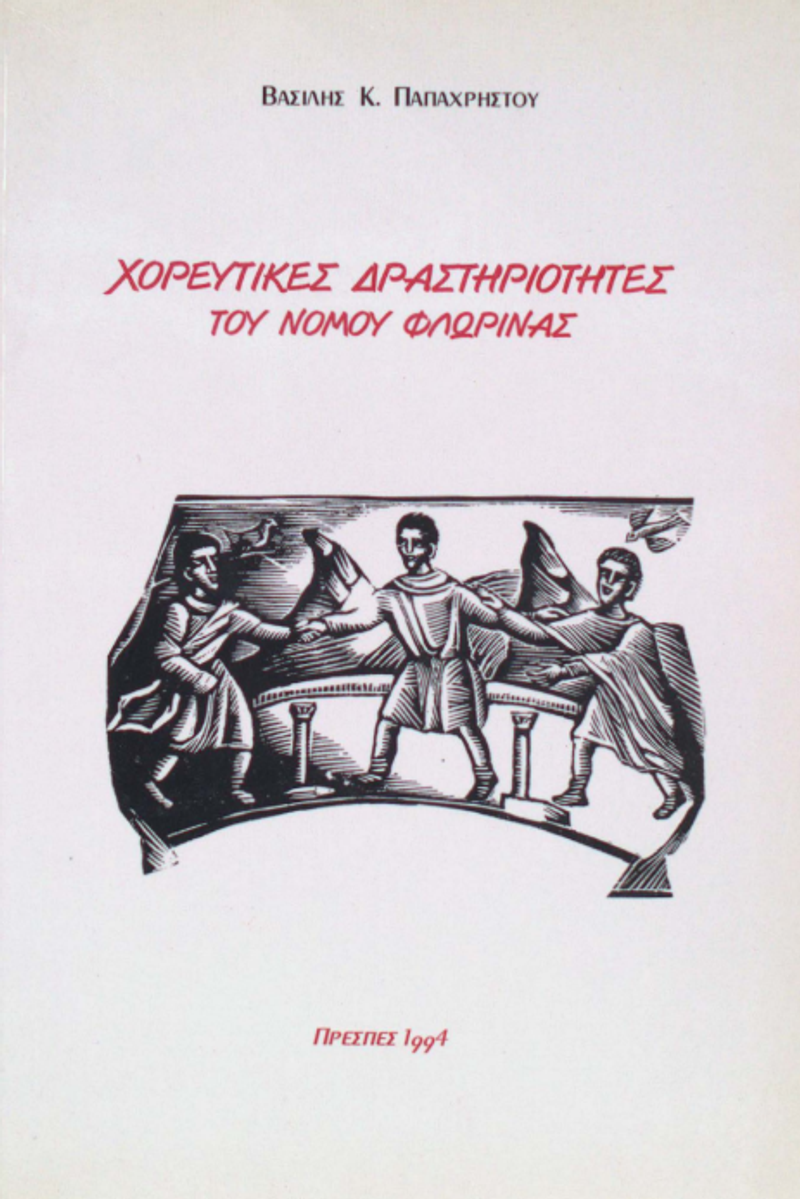
1994
Грчки
Орото во леринскиот крај
Пристап до книгата
Опис
Vasilis Papachristou’s Dance Activities of the Lerin Region is both an ethnographic record and a call to preserve the region’s rich dance traditions, which he sees as threatened by modernization, migration, and cultural homogenization. He warns that without active transmission, these dances risk surviving only as “museum pieces” rather than as living expressions of community life.
For Papachristou, folk dance is a core expression of the soul, history, and values of the people. The dances of Florina form a diverse cultural mosaic, shaped by influences from Macedonians, Greeks, Pontians, Vlachs, Thracians, Cretans, and refugees from Asia Minor.
He emphasizes that a dance’s steps, rhythm, and formation must be in harmony with its music, and that balance between movement, music, and meaning is essential for authenticity. These dances are deeply embedded in the social life of the region, accompanying weddings, religious festivals, and communal gatherings, serving as a source of identity and unity.
Papachristou calls for systematic documentation of these traditions in written and visual form, the teaching of dances to young generations in their authentic style, and the avoidance of overly rigid, “museum-like” standardization. To him, the dances of Florina are living monuments, a fusion of movement, music, and poetry, that must be actively cultivated to remain a vital part of Greece’s national heritage.
За авторот
Author