Loading...
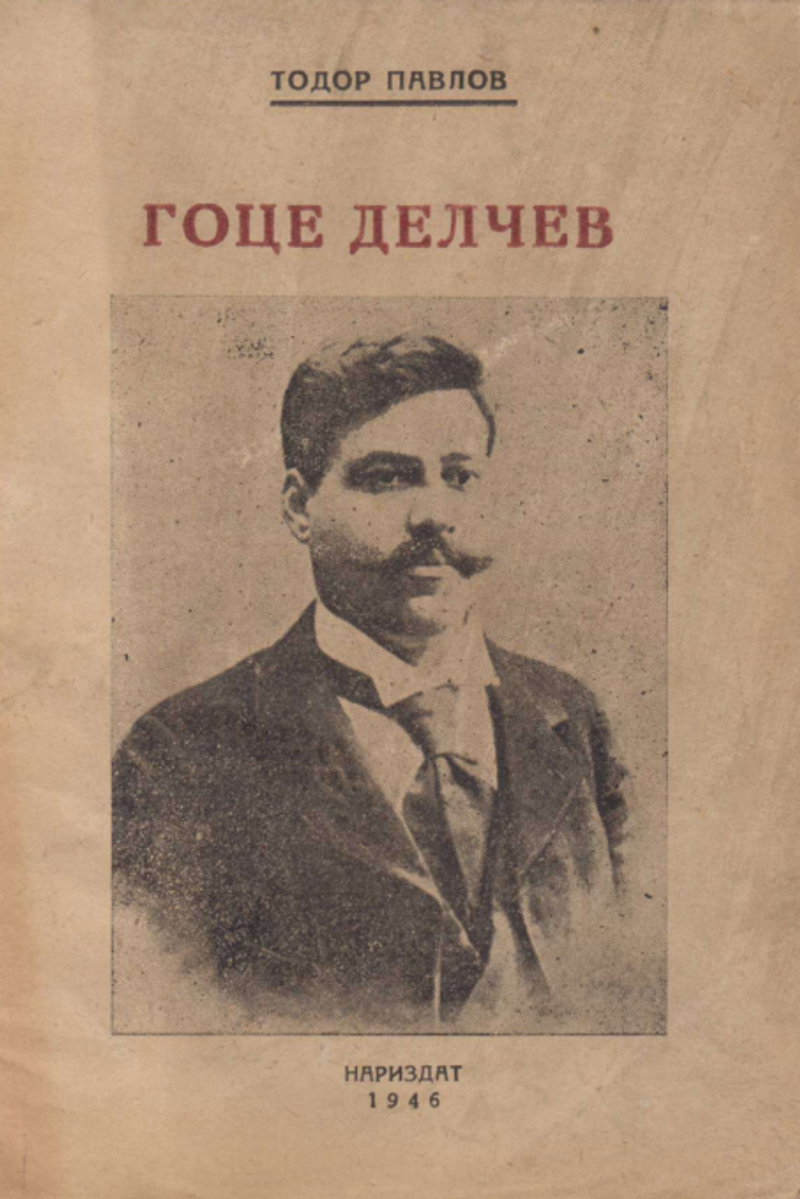
1946
Бугарски
Гоце Делчев (1946)
од Тодор Павлов
Пристап до книгата
Опис
The pamphlet Goce Delcev by Todor Pavlov, published in 1946, is a commemorative speech delivered on October 7, 1946, in Sofia's National Theater during a solemn assembly marking the transfer of revolutionary hero Goce Delchev's remains from Bulgaria to Skopje, the capital of the newly established People's Republic of Macedonia.
As a prominent Bulgarian communist philosopher and regent, Pavlov honors Delchev as an immortal symbol of the Macedonian struggle for national liberation, fulfilling Delchev's own wish to be buried in his homeland. The speech frames this event as a gesture of brotherhood between Bulgaria and Yugoslavia under communist rule, reflecting the temporary alignment in recognizing a distinct Macedonian identity amid post-World War II geopolitical shifts.
Pavlov portrays Delchev not only as a master strategist and organizer of the Macedonian national-revolutionary movement, evident in his role in the Internal Macedonian Revolutionary Organization (IMRO) and the Ilinden Uprising—but also as a socialist at heart, expelled from military school for his views and aligned with left-wing figures like Yane Sandanski and Dimo Hadjidimov.
Ultimately, the speech celebrates Delchev's enduring legacy as a beacon of freedom, asserting that his spirit lives on in the liberated Macedonia, where his ideals of independence and equality are being realized under the new socialist order. Pavlov underscores Delchev's advocacy for a distinct Macedonian language and culture, quoting his lament about the lack of books in Macedonian as evidence of his forward-thinking vision.
This tribute, delivered amid efforts to foster Macedonian national consciousness in Pirin Macedonia and beyond, highlights the transient period of Bulgarian-Yugoslav cooperation before the 1948 Tito-Stalin split, when such acknowledgments of Macedonian separateness were politically expedient.
За авторот
Author
Тодор Павлов(1890 - 1977)
Todor Pavlov was a Bulgarian Marxist philosopher, literary critic, and communist politician of Macedonian origin.
Born in the town of Štip (today in Macedonia), Pavlov became one of the most notable intellectuals of Macedonian birth to achieve prominence within the Bulgarian and international communist movements. Educated in philosophy and political thought, he emerged as a leading interpreter of dialectical materialism in Bulgaria and a strong promoter of socialist realism in literature and the arts.
Pavlov held several influential positions, including rector of Sofia University, president of the Bulgarian Academy of Sciences, and chairman of the Presidium of the National Assembly (de facto head of state) of Bulgaria between 1947 and 1948. Closely aligned with the Soviet Union and Joseph Stalin, he played a major role in shaping ideological orthodoxy in Bulgaria during the socialist era.