Loading...
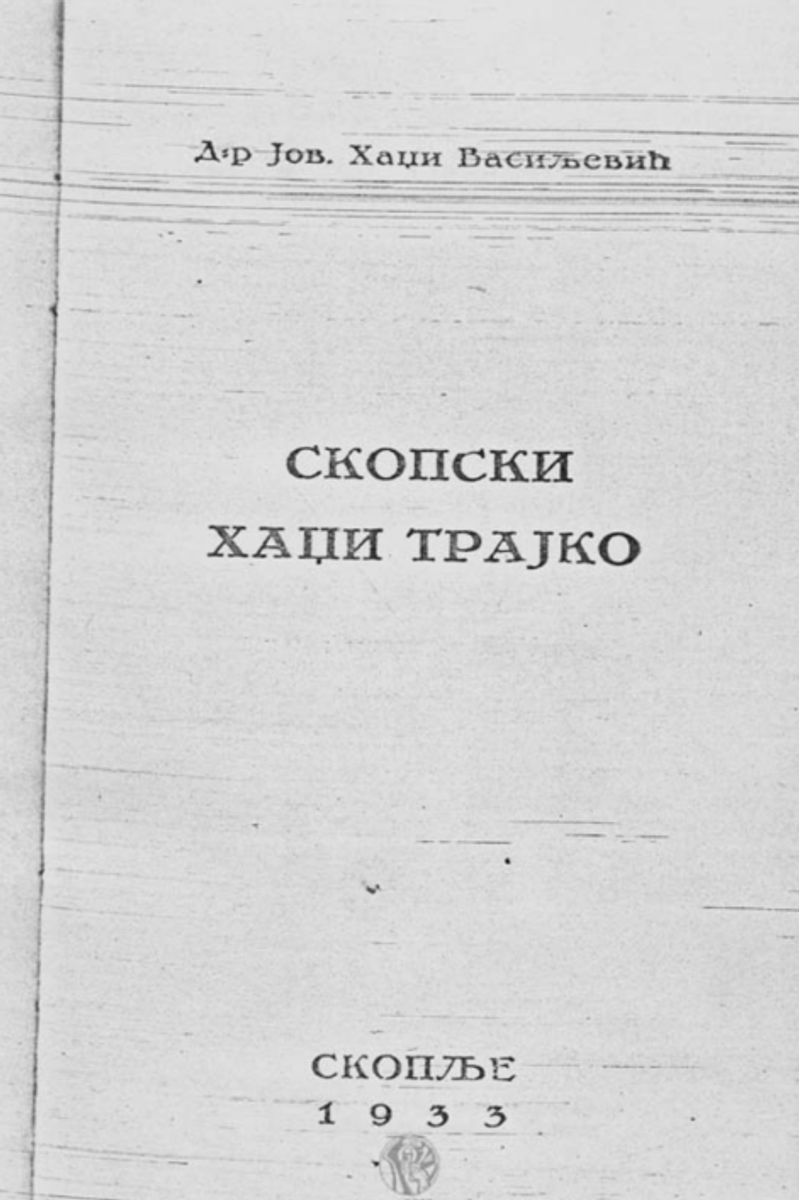
1933
Српски
Скопскиот Хаџи Трајко
Дела од Јован Хаџи-Васиљевиќ


Пристап до книгата
Опис
Skopje’s Hadži Trajko, written by Serbian historian and ethnographer Jovan Hadži-Vasiljević and published in 1933 in Skopje, is a biographical account of the life of Hadži Trajko, a prominent 19th-century merchant in Skopje during the Ottoman era. The title "Hadži" reflects his esteemed status, earned after completing a pilgrimage to Mecca, a significant achievement in Ottoman society. The book details his success as a wealthy trader engaged in caravan commerce, dealing in goods transported through Skopje’s vibrant Čaršija bazaar, connecting local markets to distant trade routes.
Beyond his commercial endeavors, Hadži Trajko played a pivotal role in supporting education and the Serbian national movement in Macedonia. He contributed land and resources for schools and backed revolutionary efforts against Ottoman rule, using his wealth and influence to foster cultural and educational growth. His sons, Hadži Nikče (Nikola) and Kostadin, continued his legacy, maintaining the family’s prominence in trade and philanthropy. The narrative highlights his commitment to the Serbian community, portraying him as a key figure in Skopje’s socio-political landscape.
The book serves as a historical tribute to Hadži Trajko’s enduring impact, with his name still recognized in Skopje through streets and local lore. Jovan Hadži-Vasiljević draws on ethnographic research to weave a story of *national awakening* and resilience, offering a window into the socio-economic dynamics of Ottoman Skopje. Skopje’s Hadži Trajko stands as a testament to the contributions of local leaders in shaping the region’s cultural and historical identity under challenging circumstances.
За авторот
Author
Јован Хаџи-Васиљевиќ(1866 - 1948)
Jovan Hadži-Vasiljević was a Serbian historian, ethnographer, journalist, and writer from Vranje. Educated in Belgrade and Vienna, he served in the Ministry of Foreign Affairs before becoming secretary of the Society of Saint Sava (1904–1940).
He took part in the Balkan Wars and World War I, documenting his retreat through Albania. His research, based largely on fieldwork in Old Serbia and Macedonia, produced over 200 works on history, geography, and ethnology.
Notable publications include Prilep i njegova okolina (1902), Južna Stara Srbija (1909–13), and Skoplje i njegova okolina (1930).