1981
English
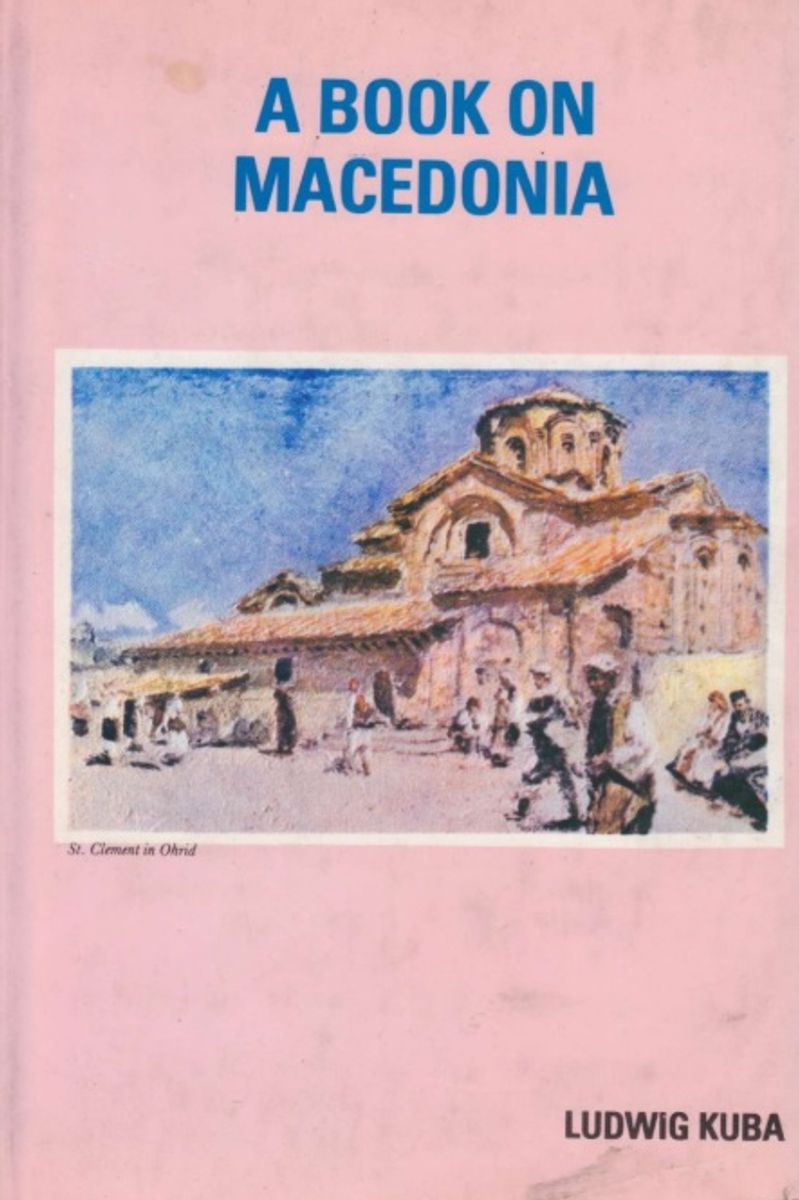
A book on Macedonia
by Ludvik Kuba
Access Book
About the Author
Author
Ludvik Kuba(1863 - 1956)
Ludvík Kuba was a Czech folklorist, musicologist, painter, writer, and professor at the Academy of Fine Arts in Prague. He was born in 1863 in Poděbrady (then part of Austria-Hungary). From an early age he studied keyboard music, and later enrolled at the Academy of Fine Arts, where he trained in the studio of Max Pirner. He continued his musical education in Paris and Munich, and eventually devoted himself to drawing and collecting folk songs.
He traveled widely throughout the Slavic lands, studying musical culture and folk traditions—beginning with the Lusatian Serbs and later continuing across the Balkans. During his journeys he produced a large number of drawings and paintings, and in the visual arts he is associated with late Impressionism, creating landscapes and portraits. He also collected Chinese and Japanese artworks, which are preserved today in the Museum of Asian, African, and American Cultures in Prague. He received numerous Czech and international awards and honors, including a Doctor of Science degree from Charles University in Prague (1936), membership in the Yugoslav Academy of Sciences and Arts in Zagreb (1935), and full membership in the Czech Academy (1937). He died in Prague in 1956.
His greatest lifelong passion was traveling and the collecting and study of Slavic folk songs and musical instruments. His most important work, Slavdom in Its Songs, was published in 16 volumes (1884–1928) and includes around 4,000 songs. Of particular importance for Macedonia is Volume XIII, Macedonian Songs (1928), where he presented his collecting work and, in his analyses, clearly highlighted the Oriental and Western European influences within Macedonian folk music. He stayed in Macedonia twice (1925 and 1927), leaving behind a rich body of material—songs, musical transcriptions, drawings, and paintings—as well as the travelogue A Book about Macedonia (1932), in which he pays special attention to Skopje, Skopska Crna Gora, Ohrid, Struga, Prilep, Bitola, Prespa, Galichnik, Smilevo, and Treskavec.