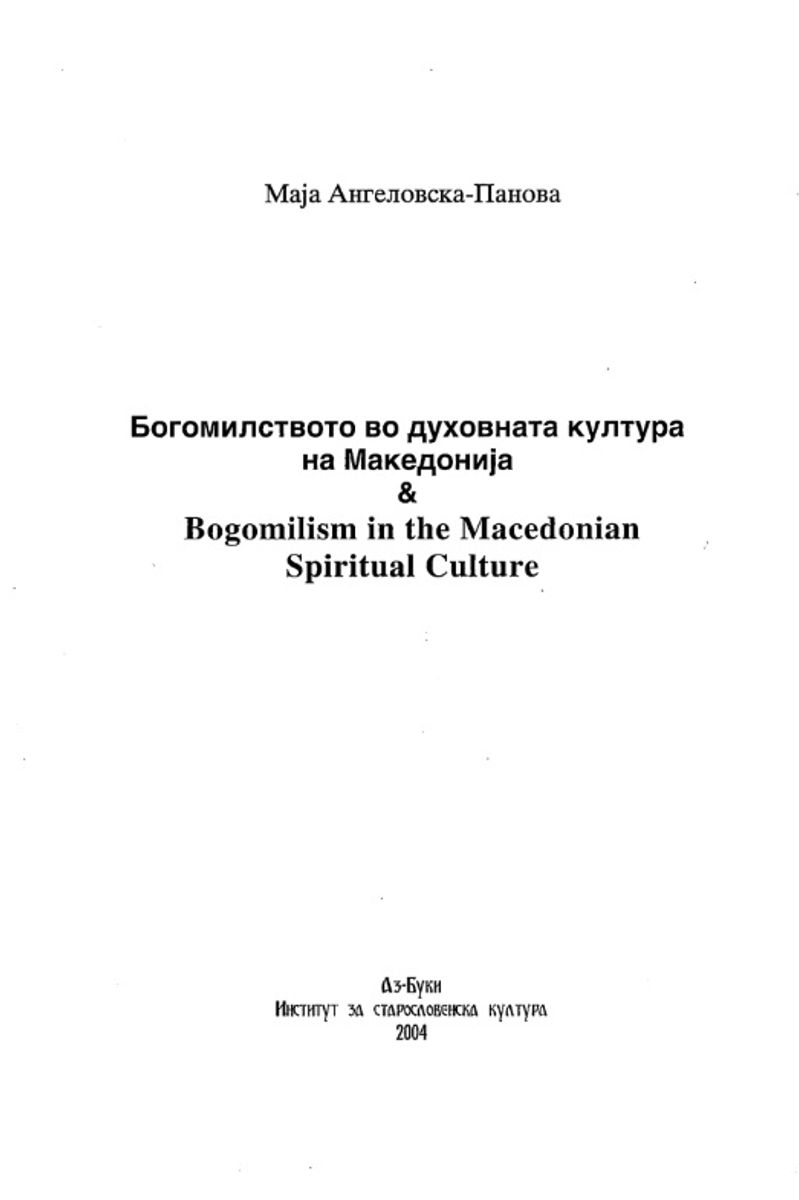
2004
Macedonian
Bogomilism in the Macedonian Spiritual Culture of Macedonia
Access Book
Note
This work has been sourced from the Academia.edu website. The materials are used for scholarly, educational, and cultural-historical purposes, in support of the preservation, study, and promotion of Macedonian cultural heritage.
Description
Bogomilism, a medieval dualistic heresy originating in the 10th century in Macedonia, is explored in Maja Angelovska-Panova’s book as a significant element in Macedonia’s spiritual heritage. The work delves into the historical context of Bogomilism, portraying it as a movement that challenged the Orthodox Christian Church by promoting ideas of spiritual purity, rejection of material wealth, and criticism of ecclesiastical hierarchy. Angelovska-Panova examines the doctrine’s roots in Manichaean and Paulician influences, emphasizing its appeal among the lower classes amid social and economic unrest in the Byzantine Empire.
In the Macedonian context, the book highlights how Bogomilism spread through regions like Prespa and Ohrid, influencing local religious practices and leading to conflicts with Byzantine authorities. It discusses key figures and texts associated with the movement, such as the teachings of priest Bogomil, and analyzes hagiographic sources that depict Bogomils as heretics. The author argues that Bogomilism’s emphasis on asceticism and moral reform resonated with Macedonian folk traditions, fostering a unique blend of heterodox beliefs within the broader Slavic cultural landscape.
The cultural implications of Bogomilism, as outlined in the monograph, extend to literature, art, and folklore, where motifs of dualism and anti-clericalism persist. Angelovska-Panova posits that this heresy contributed to the development of Macedonian spiritual identity, influencing later movements and leaving traces in apocryphal writings and oral histories. Ultimately, the book underscores Bogomilism’s role as a catalyst for religious diversity and dissent in medieval Macedonia, enriching the nation’s spiritual culture despite official suppression.
About the Author
Author