1971
English
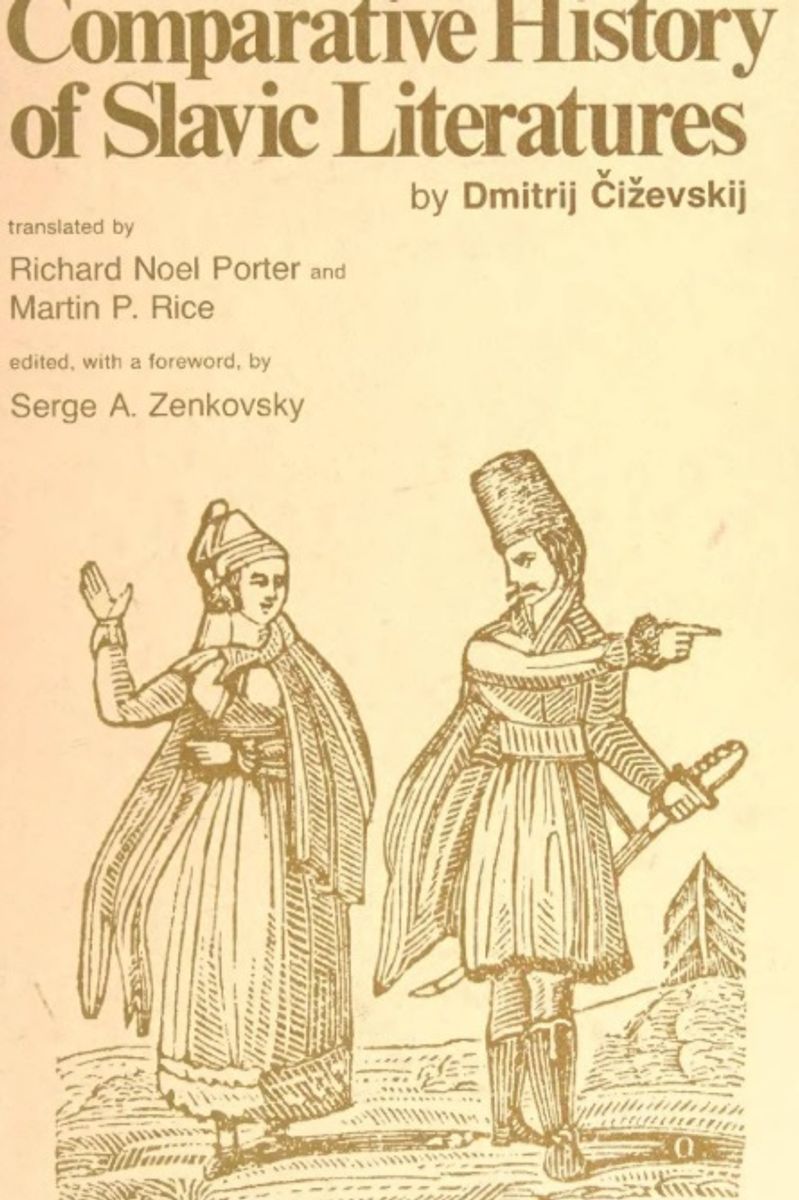
Comparative History of Slavic Literatures
Access Book
Description
"Comparative History of Slavic Literatures" by Dmitrij Čiževskij is a foundational scholarly work that examines the development of Slavic literary traditions - Macedonian, Russian, Polish, Czech, Serbian, Croatian, Bulgarian, and others, through a comparative and historical lens.
In Comparative History of Slavic Literatures, Dmitrij Čiževskij traces the origins, evolution, and interconnections of the major Slavic literary traditions, from medieval religious texts to the modern literary movements of the 19th and 20th centuries. The book explores how cultural, religious, linguistic, and political influences shaped these literatures, while emphasizing their shared roots and distinct national identities. Čiževskij uses a comparative approach to highlight parallels and divergences among the various Slavic cultures and their literary outputs.
About the Author
Author
Dmytro Chyzhevsky(1894 - 1977)
Dmytro Ivanovych Chyzhevsky (1894–1977) was a Ukrainian-born scholar of Slavic literature, history, philosophy, and culture. Of Russian-Polish-Ukrainian ancestry, he studied in St. Petersburg, Kyiv, and later in Germany under Edmund Husserl.
After leaving Soviet Russia in 1921, he taught in Prague and joined the Prague Linguistic Circle before moving to the University of Halle. During WWII he worked at Marburg, then became professor of Slavic studies at Harvard (1949–56). He later returned to Heidelberg, where he remained until his death.
Chyzhevsky’s works ranged from philosophy and folklore to Slavic and comparative literature. He produced major studies on Hryhorii Skovoroda, G.W.F. Hegel, and Nikolai Gogol, and became a leading authority on baroque literature.