2015
Bulgarian
Condemned Hope

Access Book
Description
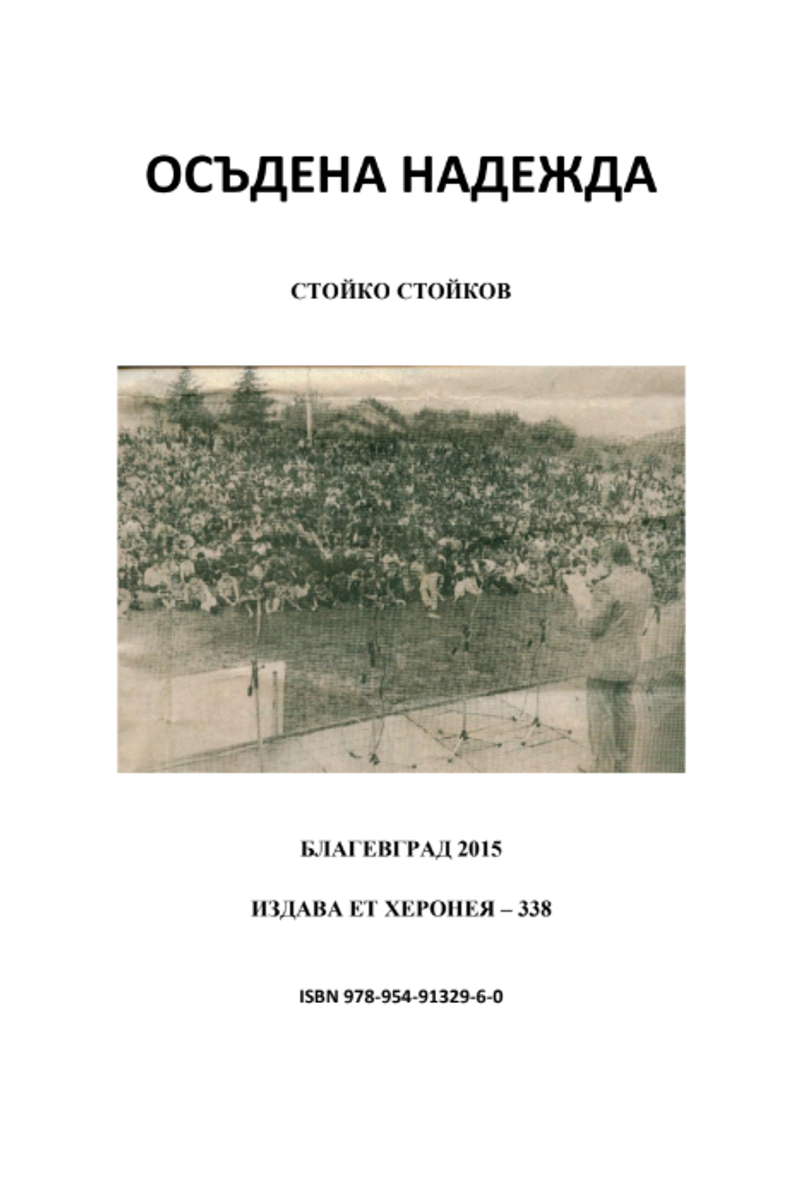
Condemned Hope by Stoyko Stoykov, published in Blagoevgrad in 2015, documents the emergence and suppression of OMO “Ilinden” in Pirin Macedonia between 1990 and 1992. The book reconstructs the atmosphere of political opening after the fall of communism, when Macedonian activists attempted to organize publicly and seek legal recognition for the Macedonian minority in Bulgaria. Through archival materials, court decisions, photographs, and personal testimony, Stoykov records the formative years of the organization.
A central focus of the work is the refusal of Bulgarian state institutions to register the organization and their denial of the existence of a Macedonian minority. The author details court rulings, police interventions, confiscations, and administrative pressure directed at activists. The narrative highlights the gap between democratic rhetoric in post-communist Bulgaria and the practical restrictions placed on Macedonian self-identification in Pirin Macedonia.
The book stands as a documentary chronicle of the struggle for recognition of the Macedonian minority in Pirin Macedonia during the post-communist transition. As a participant-observer account, it preserves firsthand material on the early 1990s and contributes to understanding the continuity of identity disputes and minority rights issues in the region at the end of the twentieth century.
About the Author
Author
Stojko Stojkov(1974)
Stojko Ivanov Stojkov is a Bulgarian-born historian of Macedonian heritage and political activist. He is an Associate Professor at Goce Delčev University in Štip, Macedonia, specializing in medieval history, Byzantine studies, and questions of ethnic identity.
Born in Sandanski (Pirin Macedonia, Bulgaria), Stojkov studied at the Ss. Cyril and Methodius University in Skopje, where he earned his master’s and doctorate. His academic work examines medieval Slavic history and the self-identification of Macedonians in Bulgaria.
Beyond academia, Stojkov is co-president of the United Macedonian Organization “Ilinden–Pirin,” a party advocating for Macedonian minority rights in Bulgaria. He has been active in promoting recognition of this minority, frequently criticizing Bulgaria’s official stance and supporting European Court of Human Rights rulings in favor of Macedonian political representation.