2008
English
Access Book
Description
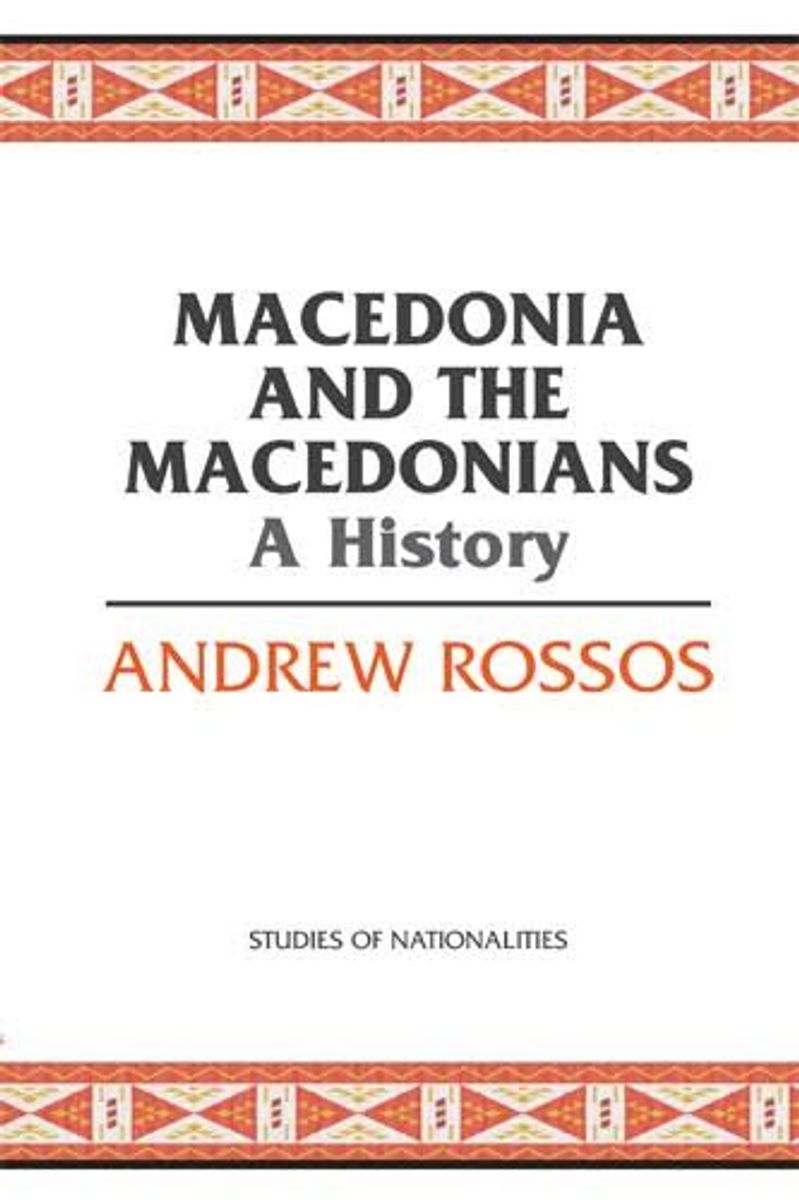
Macedonia and the Macedonians: A History (Hoover Institution Press, June 2008) is a sweeping, 392‑page narrative of the region we know as Macedonia—from its pre‑Hellenistic beginnings through the rise of the modern state in the early 21st century.
Covering roughly 2,600 years of history, Rossos examines both ancient heritage (550 BC–168 BC) and successive eras of foreign rule—Roman, Slavic, Byzantine, Ottoman—before moving into the “national awakening” of the 19th century and the particularly complex politics of the 20th century, marked by partition (1913), socialist Yugoslavia, and independent statehood after 1991. He pays special attention to the Macedonian Question—the bitter struggle between Greece, Bulgaria, and Serbia over territory and identity, and how ethnic Macedonians navigated between those nationalisms to coalesce around a distinct Macedonian identity.
Rossos interprets Macedonia’s past as shaped by alternating “golden ages” (notably under Alexander the Great and Tsar Samuil) and long “dark” chapters of foreign domination. Ultimately, he argues that wide acceptance of a Macedonian national identity is not only historically grounded but—in his view— a political necessity for stability in the Balkans and the broader European community.
Andrew Rossos, born in Aegean (Greek) Macedonia, earned his Ph.D. at Stanford and served as Professor of History at the University of Toronto. His regional background and academic training inform his sympathetic yet controversial portrayal of Macedonian nationhood and identity.
About the Author
Author
Andrew Rossos(1941)
Tags
2008MacedoniansRefugee