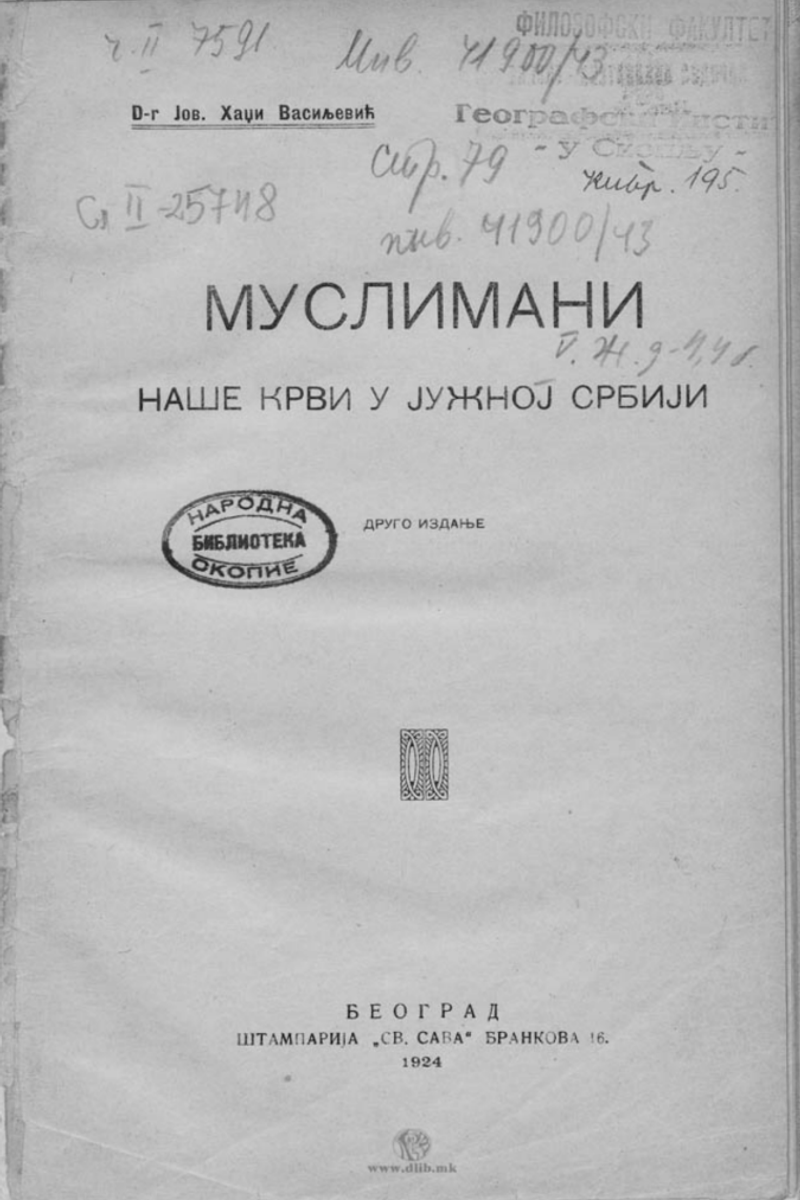
1924
Serbian
Muslims of Our Blood in Southern Serbia
More by Jovan Ćirić-Tetovac

Access Book
Description
"Muslims of Our Blood in Southern Serbia" examines the deep-rooted, centuries-long process of Islamization among Serbs under Ottoman dominion. Hadži-Vasiljević describes both the violent abductions, particularly post-1389 and the voluntary conversions driven by desires for social status, security, and material stability.
Conversion was often a pragmatic choice: embracing Islam meant preserving one’s property and earning favor in the new order, while maintaining Christianity could result in displacement or legal vulnerability. The process accelerated during major migrations and conflicts in the late 17th and early 18th centuries.
The ethno-religious landscapes of regions like Gora (Muslims of Serbian origin) and Opolje (Albanian speakers) reflect the complex intertwining of faith and identity—a reminder that Islamization did not erase national characteristics but rather reshaped them in myriad ways over generations.
About the Author
Author
Jovan Ćirić-Tetovac(1876 - 1944)
Jovan Ćirić Tetovac, a Macedonian with a Serbian consciousness, was an intellectual, teacher, and writer born in Tetovo, then part of the Ottoman Empire, now in Macedonia. A key figure in the Serbian national movement in Vardar Macedonia, he worked as an educator and cultural advocate.