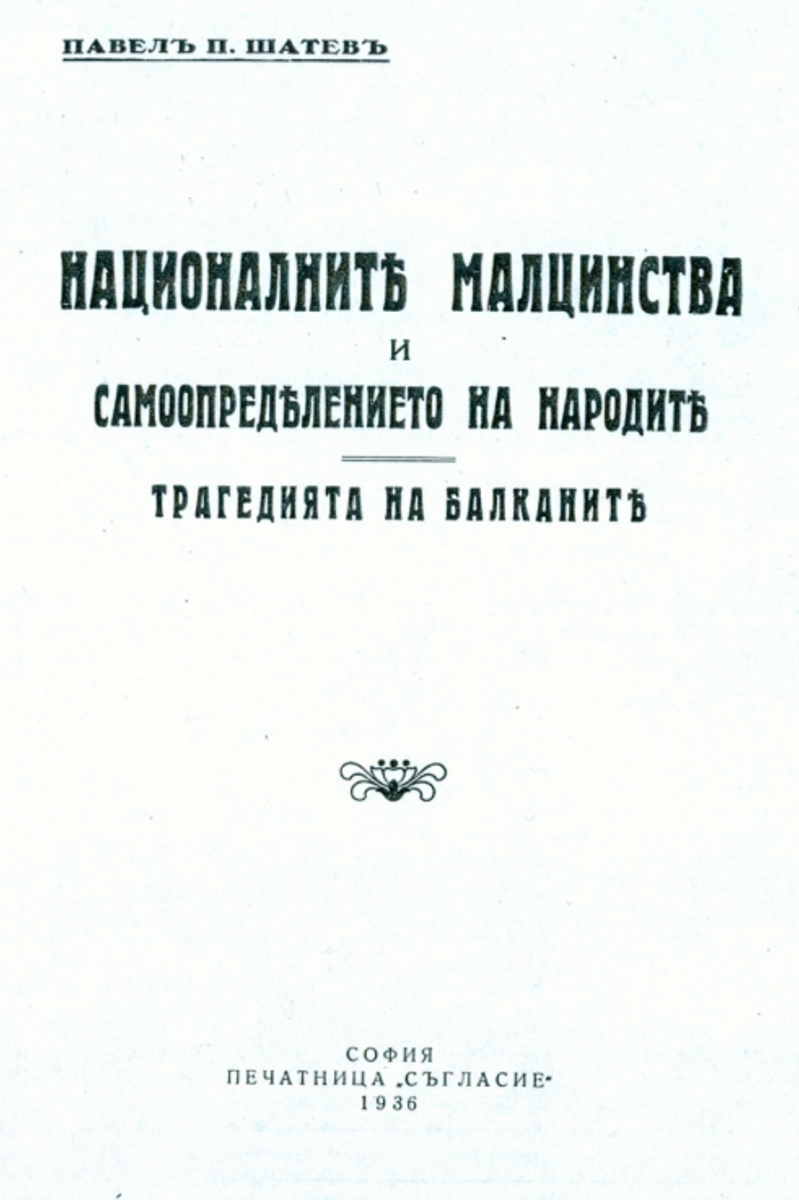
1936
Bulgarian
National Minorities and the Self-determination of Peoples: The Balkan Tragedy
by Pavel Shatev
Access Book
Description
National Minorities and the Self-determination of Peoples: The Balkan Tragedy (Националнитѣ малцинства и самоопредѣлението на народитѣ: Трагедията на Балканитѣ), published by Pavel Shatev in Sofia in 1936, presents a political and economic analysis of the global situation following the First World War. The author argues that despite the end of the war, a continuous economic and political struggle persists, leading to a general chaos in international relations. He attributes this chaos to countries increasing their production and raising customs tariffs to protect domestic industries, which in turn leads to a global economic and financial crisis. This crisis, according to the author, is not a temporary phenomenon but a crisis of capitalism itself.
The book posits that besides the economic crisis, there is also a "national crisis" in Europe, which is especially pronounced in the Balkans. This national question is not just a problem for individual nations but an international issue concerning the right to national freedom and self-determination. The author criticizes the post-war international relations for exacerbating the national question and leading to increased insecurity, a costly arms race, and economic isolationism. He argues that the legitimate pursuit of cultural development and national self-determination has been corrupted by the interests of powerful economic layers in major states, turning nationalism into a "predatory, ruthless, fierce imperialism".
Shatev specifically addresses the Bulgarian national question, stating that it has been the cause of numerous bloody conflicts and sacrifices, but remains unresolved. He blames the failure to resolve this issue on a lack of clear vision, rational leadership, and moral strength to overcome personal and group egoism. The author defines a nation as a stable community with a unity of language, territory, economic life, and psychological character. He concludes that true nationalism should be distinguished from extreme nationalism and chauvinism, and that the only way to avoid new catastrophes is to foster democracy between nations as members of a global community.
About the Author
Author
Pavel Shatev(1882 - 1951)