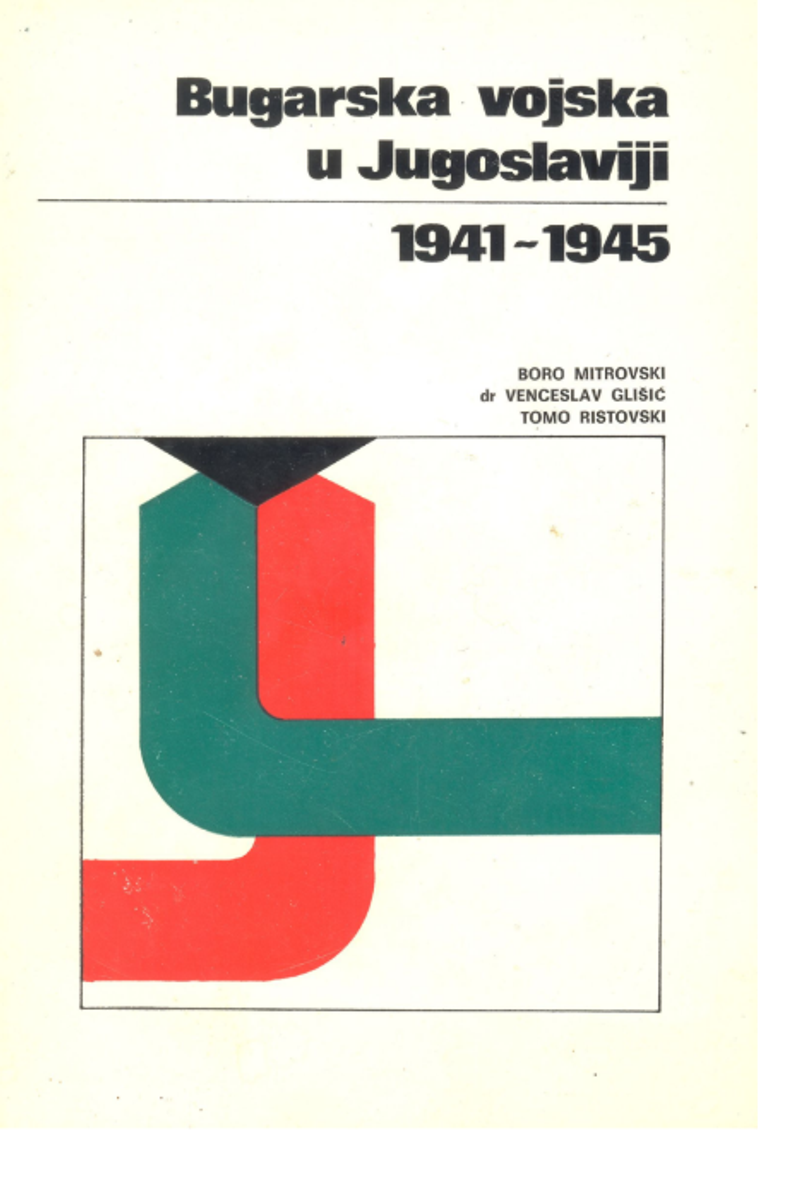
1971
Serbian
The Bulgarian Army in Yugoslavia 1941–1945
Access Book
Description
The book The Bulgarian Army in Yugoslavia 1941–1945 examines Bulgaria’s role in Yugoslavia during World War II, focusing on three main aspects: the Bulgarian occupation of parts of Yugoslavia from April 1941 to September 1944; the cooperation between the Yugoslav Partisans and Bulgaria’s anti-fascist resistance; and the participation of The Fatherland Front-Bulgaria in final battles on Yugoslav soil in 1944–1945. It presents Bulgaria’s integration into the Axis camp, its strategic cooperation with Nazi Germany, and the occupation of Macedonia and southeastern Serbia.
The authors describe how Bulgaria’s alliance with Germany allowed Axis forces to launch their Balkan campaigns, and how Bulgarian forces acted as occupiers, engaging in repression and exploitation. The second part of the book addresses political contacts and tensions between the Communist Party of Yugoslavia and the Bulgarian Workers’ Party, particularly over the Macedonian national question, which created lasting disagreements even within the anti-fascist front.
In the final section, the study analyzes the military contribution of Bulgaria after its September 1944 political shift, when it joined the Allies. It evaluates the real scale and impact of Bulgarian troops’ participation against German forces in Yugoslavia, contrasting this with Bulgarian historiography, which often overstates their role. Based on archival sources, the authors provide a nuanced assessment of complex wartime relations between the two countries.
About the Author
Author