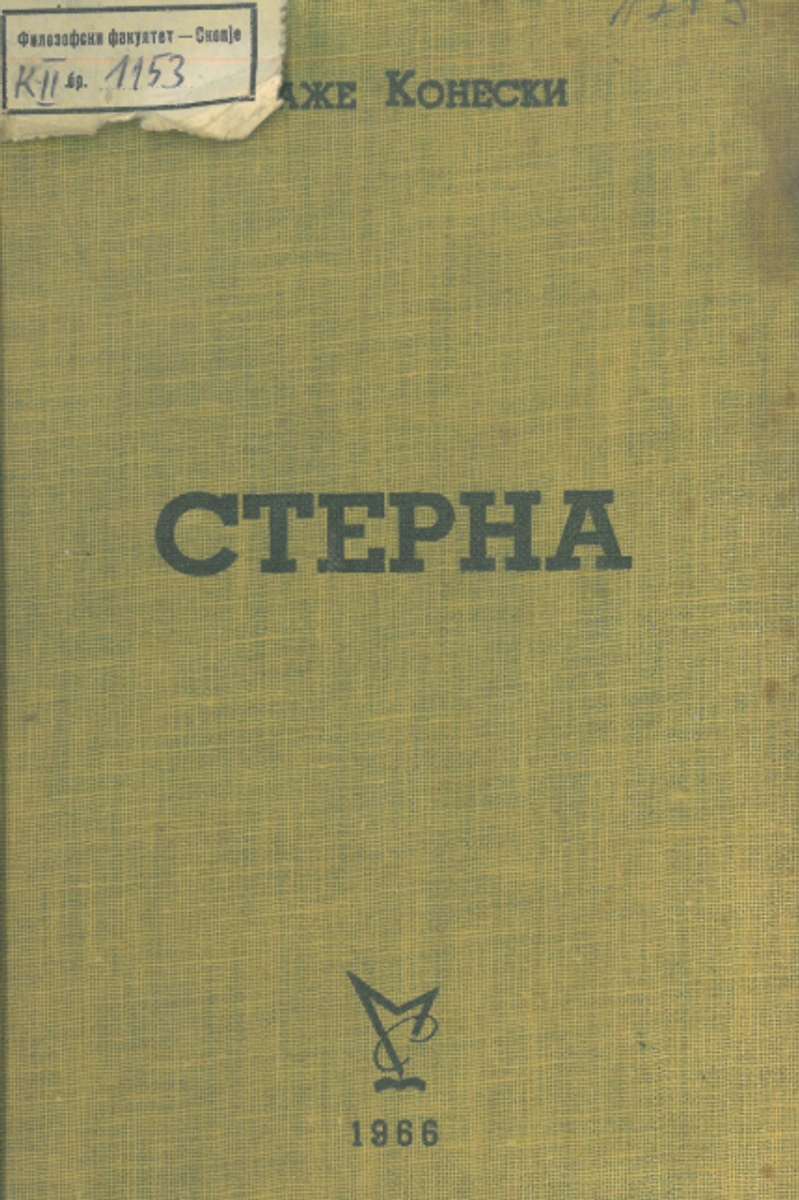
1966
Macedonian
The Cistern
More by Blaže Koneski
History of the Macedonian Language
1986
by Blaže Koneski
The Macedonian Language in the Development of the Slavic Literary Languages
1968
by Blaže Koneski
On the Macedonian Literary Language
1952
by Blaže Koneski
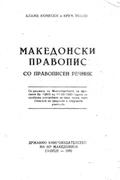
Macedonian Orthography with Orthographic Dictionary
1950
by Blaže Koneski, Krum Tošev
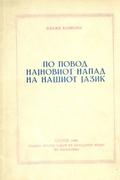
On the Latest Attack on Our Language
1948
by Blaže Koneski
Access Book
Description
The book, titled The Cistern (Стерна), is a collection of poetry by the Macedonian author Blaže Koneski, published in 1966. The poems within the book explore a variety of deeply personal and national themes.
The collection includes pieces such as "The Heavy Dance" (Тешкото), which uses the traditional dance as a powerful metaphor for the historical suffering and struggle of the Macedonian people for freedom. Another poem, "Memory" (Спомен), reflects on a personal journey and the melancholy of a "trodden tribe".
Other poems, such as "Columbus" (Колумбо), deal with the bittersweet feelings of a journey's end and the sadness of returning home. The fragments from the poem "Handshake" (Ракување) delve into the concept of "living water" (живата вода), which is a metaphor for poetry itself, serving to inspire a small and suffering nation to rebel and sacrifice for its cause.
The collection is a lyrical meditation on the past, national identity, and the role of the poet in a changing world.
About the Author
Author
Blaže Koneski(1921 - 1993)
Blaže Koneski was a Macedonian poet, writer, translator, and linguist, widely regarded as a key figure in the standardization of the modern Macedonian language. Born in Nebregovo, near Prilep (then in the Kingdom of Serbs, Croats, and Slovenes), he graduated from the Faculty of Philosophy in Belgrade in 1941. Koneski played a pivotal role in codifying the Macedonian literary language post-WWII, serving as a leading member of the commission for language standardization.
He co-authored the seminal "Macedonian Orthography" (1950) with Krum Tošev, establishing spelling rules for the language. Koneski was a professor at the Faculty of Philosophy in Skopje, where he also served as dean, and was the first president of the Macedonian Academy of Sciences and Arts (MANU). His scholarly work focused on Macedonian phonology, grammar, and literature, producing numerous essays, textbooks, and studies. As a poet, he published influential collections like Mostot (1945) and Zemjata i ljubovta (1950), blending modernist and folk elements.
Koneski also translated works by Shakespeare, Goethe, and Pushkin into Macedonian, enriching its literary tradition. His contributions earned him recognition as a cornerstone of Macedonian cultural identity.
More by Blaže Koneski
History of the Macedonian Language
1986
by Blaže Koneski
The Macedonian Language in the Development of the Slavic Literary Languages
1968
by Blaže Koneski
On the Macedonian Literary Language
1952
by Blaže Koneski
Macedonian Orthography with Orthographic Dictionary
1950
by Blaže Koneski, Krum Tošev
On the Latest Attack on Our Language
1948
by Blaže Koneski