1968
Macedonian
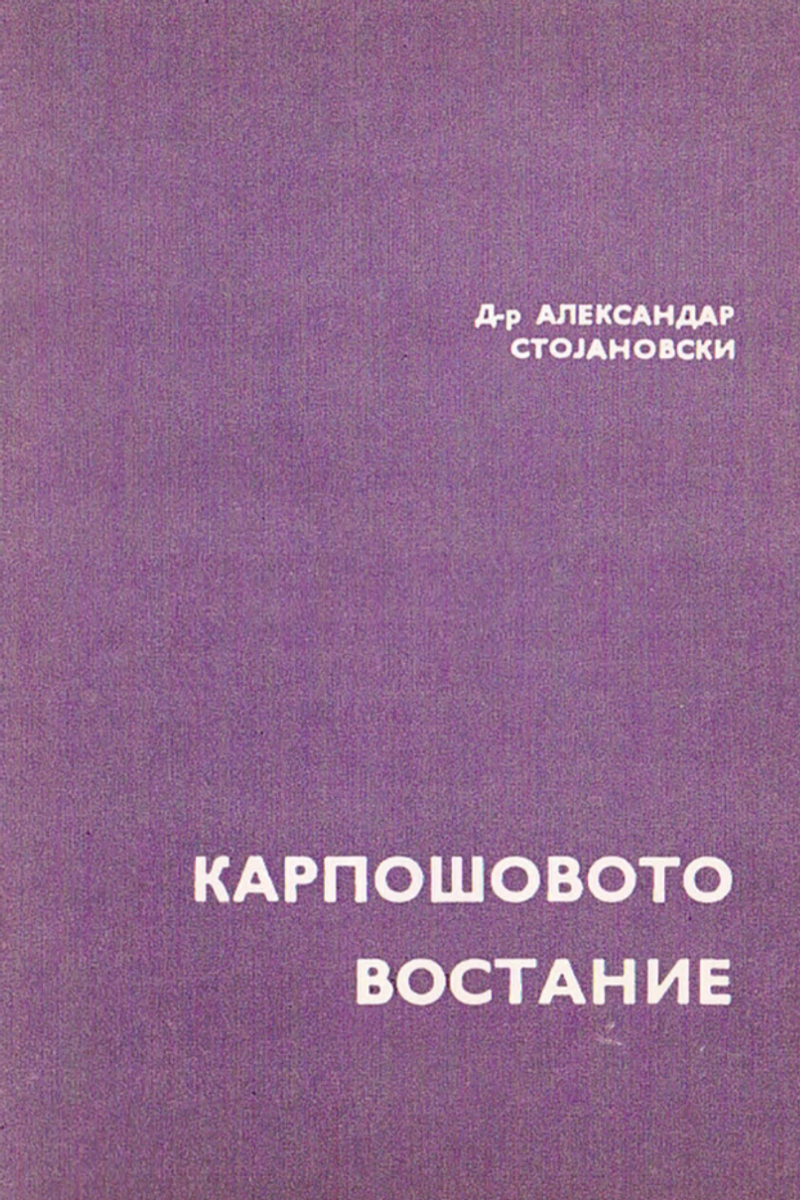
The Karposh Uprising
Access Book
Description
The Karposh Uprising by Dr. Aleksandar Stojanovski analyzes the 1689 anti-Ottoman revolt in Macedonia within the broader context of the Great Austro–Turkish War (1683–1699). The study opens with an examination of Ottoman feudal exploitation, taxation pressures, and social deterioration among the Macedonian peasantry (pp. 8–11). Stojanovski situates the uprising within the larger military developments following the Austrian advance into the Balkans, arguing that local resistance grew in response to both internal oppression and the shifting balance of power in the region.
A substantial portion of the work is devoted to the rise of Karposh from hajduk leader to central organizer of the revolt (pp. 12–18). The author reconstructs the seizure of Kratovo and Skopje, the establishment of a short-lived liberated territory, and the symbolic recognition reportedly granted by Austrian forces. Particular attention is given to the participation of miners from the Kratovo basin, the role of urban fortifications, and the interaction between local insurgents and Austrian military command. The narrative emphasizes that the uprising represented a broad-based popular movement rather than an isolated bandit action.
The publication reflects the historiographical approach of post-war Macedonian historical scholarship and presents the uprising as part of the long continuity of resistance against Ottoman rule. Written in the twentieth century, the study integrates archival sources, Ottoman chronicles, and European diplomatic records to reconstruct the events of 1689. As a focused historical analysis, it serves as a source for understanding early modern resistance movements in Macedonia and the regional consequences of the Great Turkish War.
About the Author
Author
Aleksandar Stojanovski(1929 - 2009)