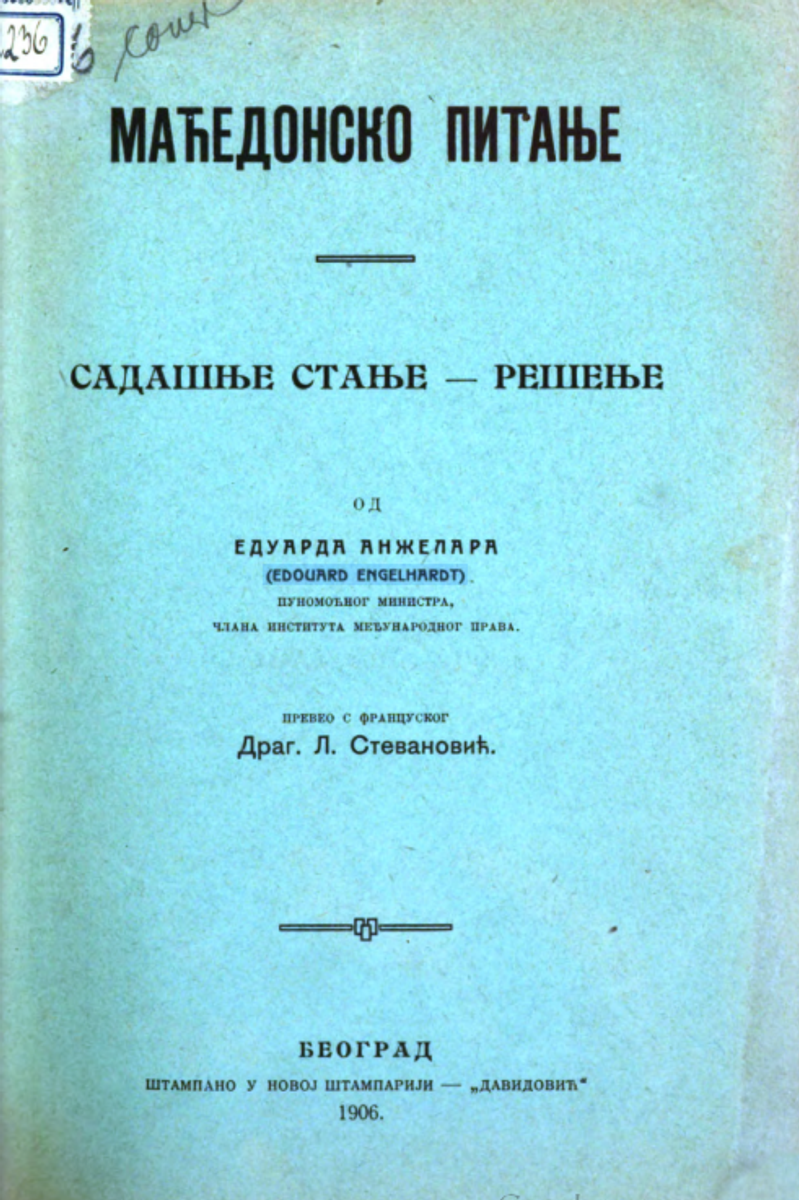
1906
Serbian
The Macedonian Question
Access Book
Description
The Macedonian Question, translated in Serbian by Dragomir Stevanović, is a historical-political work examining the complex ethnic, cultural, and political landscape of Macedonia from the late 19th to early 20th century. The author explores how competing national movements - Serbian, Bulgarian, and Greek, each sought to claim the Slavic population as their own, using religion, education, and political influence to shape identity. This struggle unfolded within the weakening Ottoman Empire, where foreign powers and revolutionary organizations exploited the instability to advance their agendas.
The book provides detailed accounts of key political events, uprisings, and diplomatic maneuvers that shaped the fate of Macedonia. It emphasizes the importance of historical heritage and linguistic evidence in defining national belonging, presenting arguments that challenge Bulgarian claims and support the view that the Slavic population in Macedonia is ethnically Serbian. The narrative weaves historical analysis with firsthand observations, illustrating the daily realities of life under Ottoman rule, from rural villages to urban centers.
Throughout, the author underscores the strategic importance of Macedonia as a crossroads of cultures and a focal point of Balkan politics. The work not only documents the local population’s struggles but also reflects the intense nationalist discourse of the era. By combining political commentary with ethnographic detail, it serves as both a historical record and a persuasive piece of nationalist advocacy, firmly positioning Macedonia within the Serbian national narrative.
About the Author
Author
Édouard Engelhardt(1828 - 1916)