1995
Serbian
The Macedonization of Southern Serbia
Access Book
Description
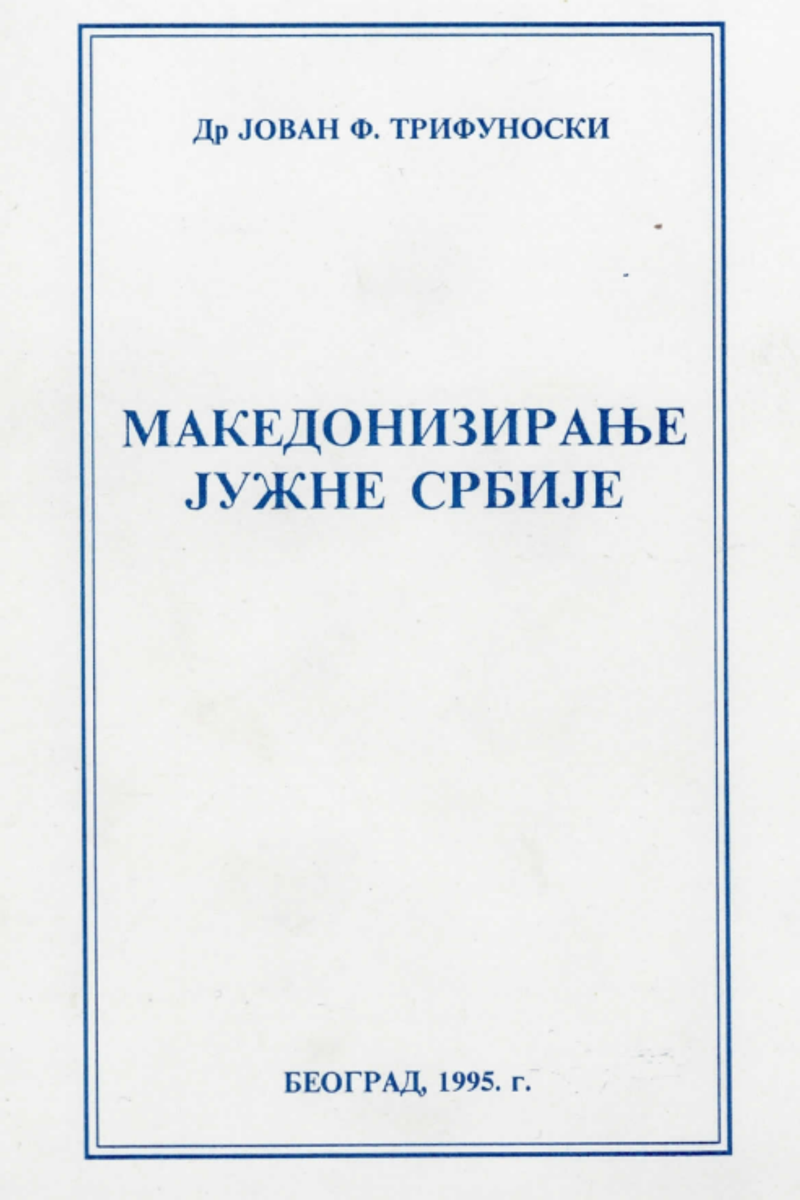
"The Macedonization of Southern Serbia", authored by Dr. Jovan F. Trifunoski in 1995, is a book that aims to highlight the historical Serbian character of the regions of Upper and Middle Povardarje and Podrimlje, which were liberated from Turkish rule during the Balkan Wars of 1912 and 1913. The author argues that after World War II, official Serbia inexplicably abandoned its claim to this medieval Serbian territory, which was the center of the old Serbian state in the 13th and 14th centuries. The book is a collection of the author's previous articles and studies, starting with one titled "Macedonization of Southern Serbia" published in the newspaper "Država" in 1994, which the book is named after. The author's goal is to stimulate further research into these topics.
The book discusses the territorial definitions of Macedonia and Old Serbia according to prominent geographers. It cites Milenko S. Filipović (1937), who identifies "real Macedonia" as only the southeastern part of Southern Serbia, with a population ethnically similar to the Slavic people around Thessaloniki. The book also quotes Jovan Cvijić (1906), who noted the disputed borders between Old Serbia and Macedonia. Cvijić ultimately defines the northern border of Macedonia as being south of the cities of Prilep and Veles. The text also includes a section on "Macedonizing Southern Serbia" based on the story of Stevan Simić, a pre-war professor and director of a gymnasium in Veles and Prizren.
The publication also contains sections on folk traditions and stories from the region. It includes chapters titled "The Kosovo Battle in Folk Traditions from Povardarje" and "The Great Migration of Serbs in Folk Traditions from Povardarje". The book presents various narratives and legends from the people of Povardarje and Podrimlje, focusing on events related to the Kosovo Battle and the Great Migration of Serbs in the 17th century. The book concludes with chapters on medieval districts in Povardarje and the history of Markov Monastery and Skopje's Crna Gora Monasteries, drawing on folk tales and traditions to emphasize the historical and cultural ties of the region to Serbia.
About the Author
Author
Jovan Trifunoski(1914 - 1997)