1947
Bulgarian
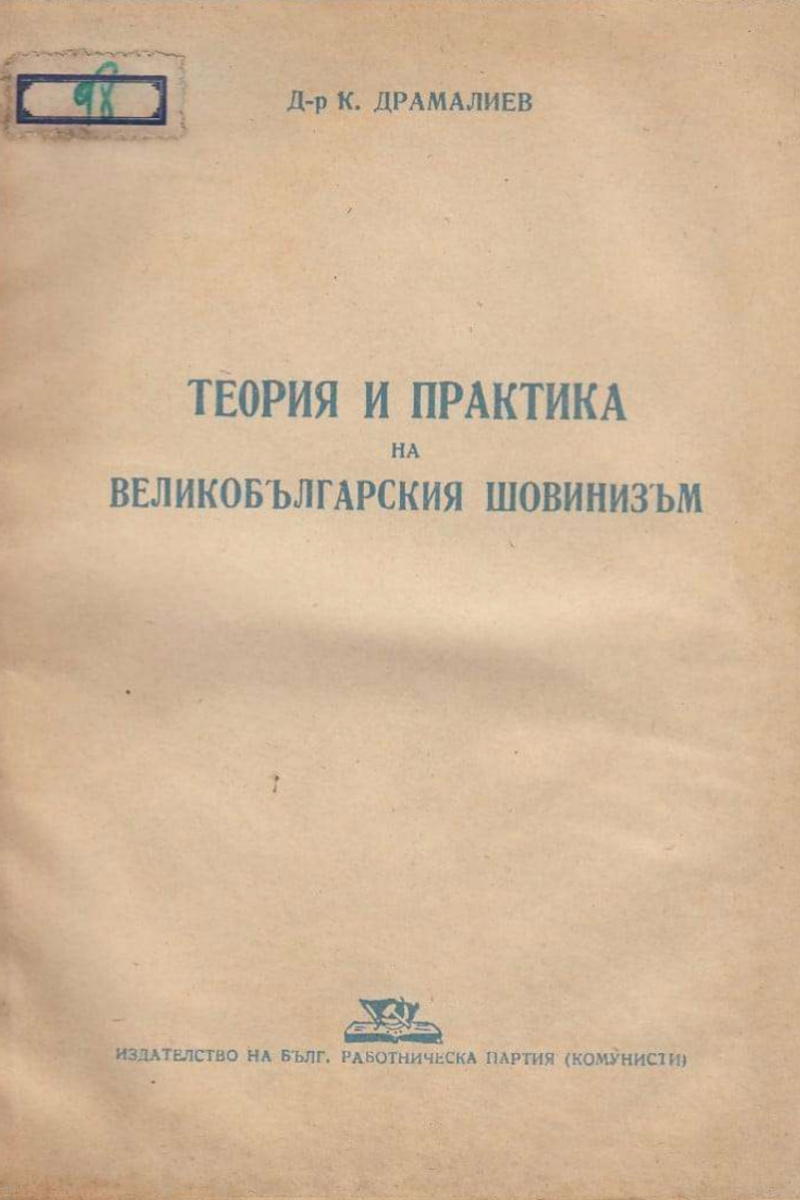
Theory and Practice of Great Bulgarian Chauvinism
Access Book
Description
Theory and Practice of Great Bulgarian Chauvinism by Kiril Dramaliev, published in Sofia in 1947 by the publishing house of the Bulgarian Workers’ Party (Communists), is a political-ideological study examining the historical roots and modern expressions of Great Bulgarian chauvinism. The work traces the development of nationalist doctrines in Bulgaria from the late nineteenth century through the interwar period, linking them to imperial ambitions, monarchist policies, and alliances with fascist regimes. Dramaliev situates Bulgarian expansionist ideology within broader European nationalist and imperialist movements, drawing parallels with German militarism and racial theories.
A significant portion of the book addresses the impact of these doctrines on Macedonia, arguing that chauvinist interpretations denied the separate Macedonian national identity and sought to incorporate Macedonian history and revolutionary traditions into a Bulgarian national framework. The author analyzes political speeches, educational policies, and diplomatic actions connected to the Balkan Wars and the First and Second World Wars, presenting them as expressions of expansionist strategy. Particular emphasis is placed on the role of the monarchy and segments of the Bulgarian political elite in promoting territorial revisionism.
The publication reflects the ideological environment of immediate post-war socialist Bulgaria and articulates criticism of nationalist and monarchist policies within a Marxist framework. Written in 1947, it forms part of the broader effort to reassess pre-war state ideology and to distance the new political order from earlier expansionist doctrines. As a contemporary political study, it serves as a source for understanding how nationalism, imperialism, and the Macedonian question were interpreted within the discourse of early communist Bulgaria.
About the Author
Author
Kiril Dramaliev(1892 - 1961)