1924
Serbian
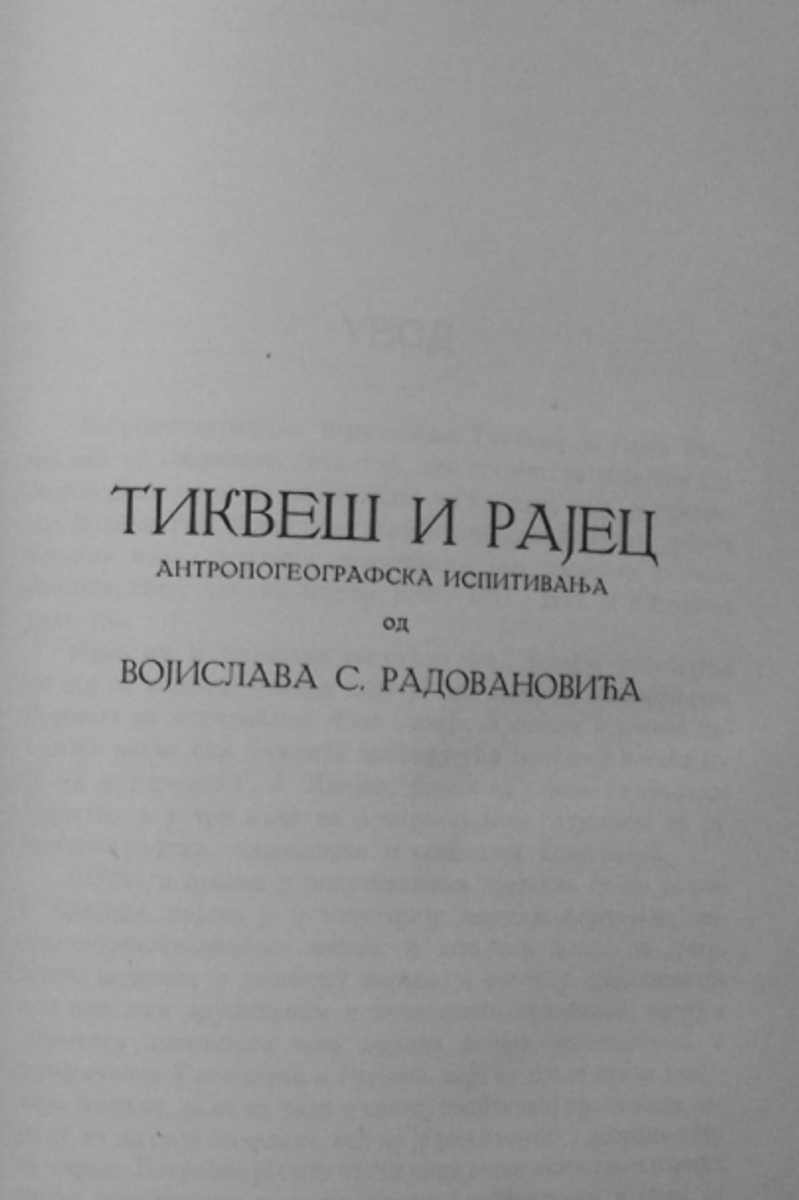
Tikveš and Raec: Anthropogeographic Studies
Access Book
Description
Tikveš and Raec by Vojislav Radovanović is a comprehensive ethnographic and geographic study of the Tikveš and Raec regions in present-day Macedonia, produced within the early twentieth-century Serbian scholarly tradition. Based on extensive field research, the book offers a detailed description of the natural environment, including climate, terrain, vegetation, and water systems, and examines their influence on settlement patterns and economic life. Its documentation of archaeological sites and historical landmarks provides valuable material evidence of the region’s long-standing cultural and historical continuity.
Beyond physical geography, the study devotes significant attention to the everyday social and cultural life of the local population. Radovanović records traditional economic activities such as agriculture, viticulture, and animal husbandry, with particular emphasis on the Tikveš wine-growing region, while also describing family organization, dress, customs, religious celebrations, and oral traditions. These ethnographic observations preserve an important snapshot of life in central Macedonia during the late Ottoman and early post-Ottoman period, though they are interpreted through an external scholarly framework.
Tikveš and Raec is primarily valued as a source of empirical data and field observation rather than as a definitive interpretation of local identity. While shaped by the methodological and ideological assumptions of its time, the work remains an important reference for understanding regional development, demographic change, and social structures in Tikveš and Raec. Read critically, it contributes to the broader reconstruction of Macedonian regional history and cultural heritage, complementing indigenous sources and later Macedonian scholarship.
About the Author
Author