1940
Bulgarian
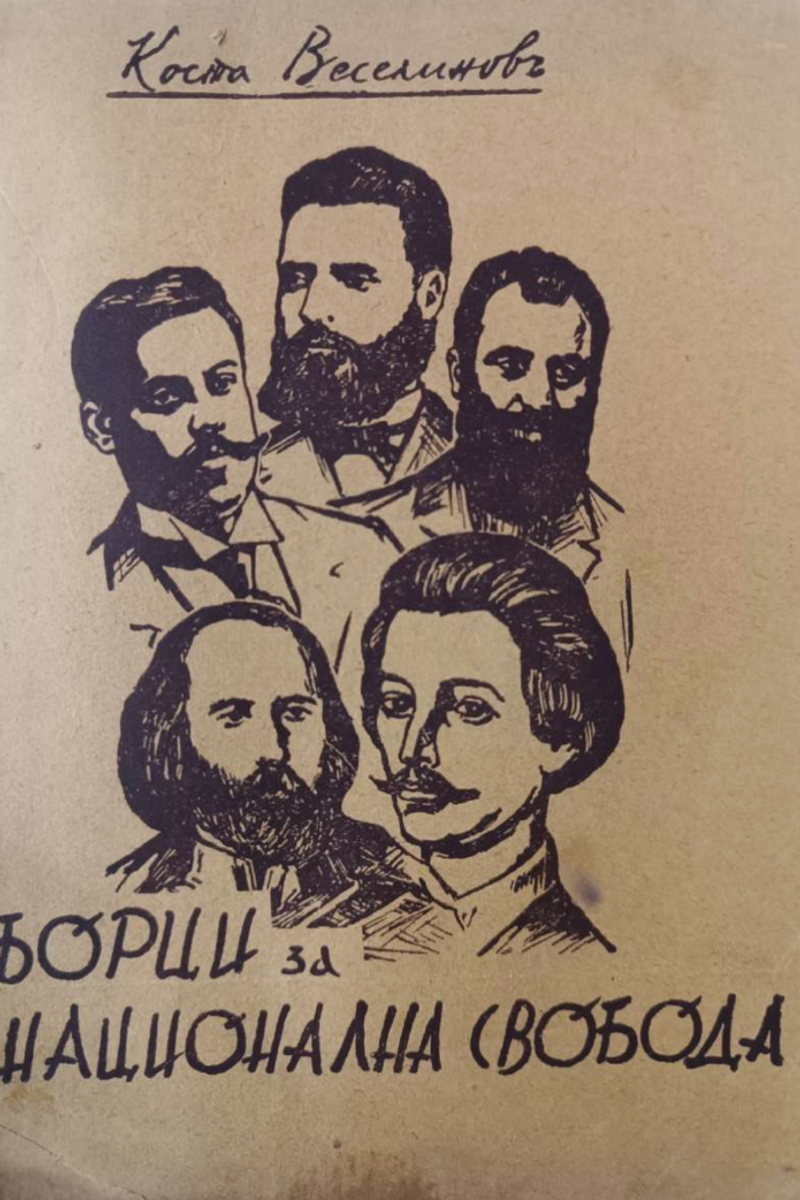
Fighters for National Freedom
More by Kosta Veselinov

Access Book
Description
Fighters for National Freedom by Kosta Veselinov, published in the late 1930s, is a concise historical-political booklet presenting several nineteenth- and early twentieth-century revolutionary figures as ethical and political models. Structured as a sequence of biographical essays, the work includes figures such as Hristo Botev and Goce Delchev, placing them within a shared tradition of liberation struggle in the Balkans. Veselinov’s purpose is openly educational: to shape civic consciousness through exemplary lives marked by commitment and sacrifice.
In the section devoted to Goce Delchev, the author emphasizes his organizational discipline, ideological clarity, and insistence on internal moral rigor within the revolutionary movement. Delchev is portrayed not merely as a military leader but as a thinker who connected national freedom with social justice and popular participation. His activity within the Internal Macedonian Revolutionary Organization is framed as conscious, structured work rooted in collective dignity and responsibility. As with Botev, the narrative highlights the unity of thought and action.
The publication reflects the intellectual climate of the late interwar period and illustrates how revolutionary heritage was interpreted in relation to contemporary debates about national identity, civic virtue, and political responsibility. As a didactic historical booklet, it integrates biography with moral reflection and political commentary. It serves as a source for understanding how figures such as Delchev and Botev were positioned within educational and cultural discourse prior to the Second World War.
About the Author
Author
Kosta Veselinov(1908 - 1942)