2009
Macedonian • English
Memories not Lost

Access Book
Description
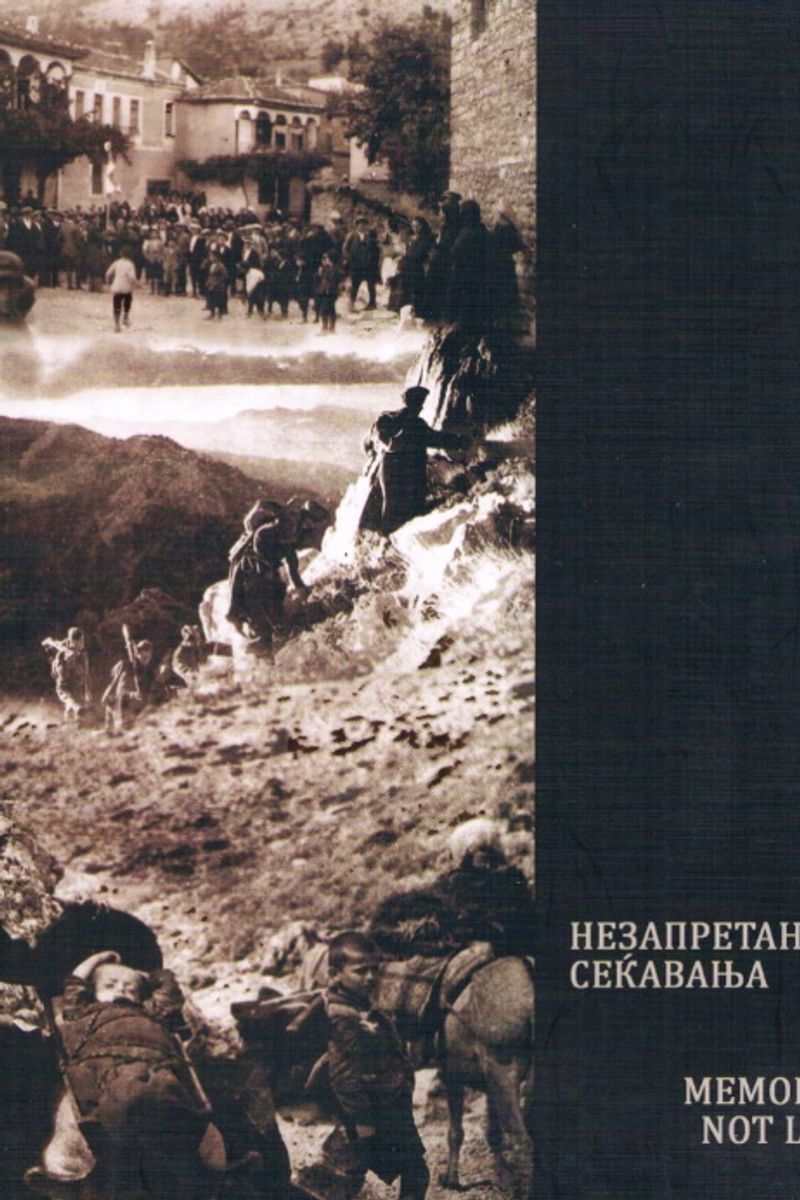
Memories Not Lost is an exhibition catalogue published by the Museum of Macedonia in 2009, dedicated to the fate of the Macedonians from the Aegean part of Macedonia during the Second World War and the Greek Civil War . Through photographs, archival documents and testimonies, it traces the occupation, partition and the participation of the local population in the anti-fascist struggle.
Particular attention is given to the formation of EAM and ELAS, the establishment of Macedonian organizations such as MAO and SNOF, and the involvement of Macedonians in military and political structures. The catalogue also outlines the complex relations between the Greek leadership, British influence and Yugoslav policy, as well as the consequences of the agreements reached in 1943–1944.
The final sections address the aftermath of the Civil War, displacement and the loss of the historical homeland, emphasizing the long-term trauma and rupture in national continuity. The publication stands as a documentary overview and a museological contribution to preserving the collective memory of this period.
About the Institution
Institution
The Museum of Macedonia is a national institution in Macedonia and one of the oldest museums in the country. It is located in the Old Bazaar in Skopje, near the Skopje Fortress. The Museum of Macedonia was created by joining three museums in one. The three museums that were unified were the archaeological, historical and ethnological museum, of which the archaeological museum was the oldest one; it was opened in 1924 and that date is considered as an establishing date of the national museum. During the existence of the Socialist Republic of Macedonia, the museum was known as People's Museum of Macedonia.
The museum has got total area of 10.000 m², of which 6000 m² are meant for permanent or temporal exhibitions. The institution is of complex character, which means it gathers, keeps, conserves and presents the national Macedonian historical and cultural heritage.