2021
Macedonian
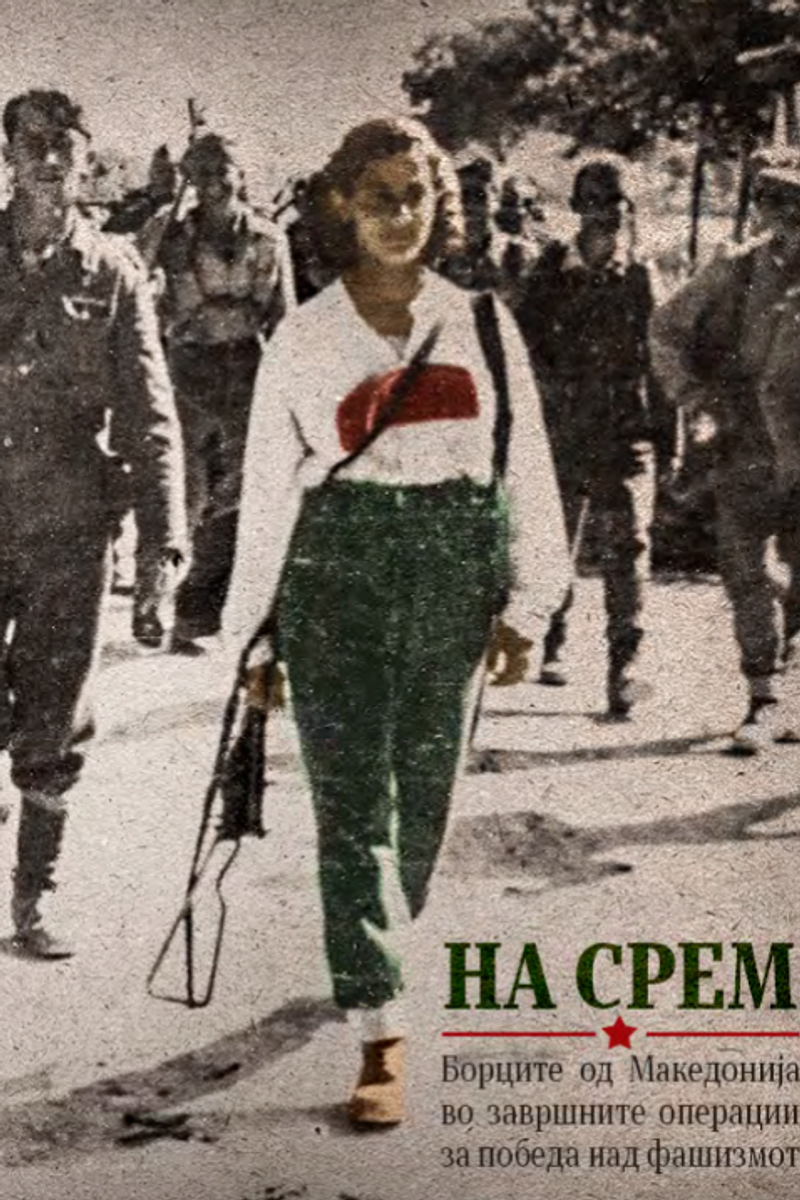
On the Srem Front: Fighters from Macedonia in the Final Operations for the Victory over Fascism
More by Museum of Macedonia

Access Book
Note
This work has been sourced from the Museum of Macedonia. The materials are used for scholarly, educational, and cultural-historical purposes, in support of the preservation, study, and promotion of Macedonian cultural heritage.
Description
On the Srem Front: Fighters from Macedonia in the Final Operations for the Victory over Fascism documents the participation of Macedonian fighters in the Srem Front (October 1944–May 1945), the largest battlefield in former Yugoslavia during WWII. After liberating Macedonia in late 1944, Macedonian units reorganized the 15th Corps (over 15,000 troops), mobilized to 83,000 soldiers, and trained with Soviet aid. A brief mutiny in Skopje (January 1945) protested deployment to Srem, demanding Thessaloniki instead, but was quickly suppressed without executions.
Macedonian forces arrived in January 1945, receiving Soviet equipment while the front held back retreating German Army Group E. Facing 450,000 Germans and 230,000 collaborators against growing Yugoslav forces (over 800,000), the breakthrough offensive began in April 1945. Macedonian divisions fought key battles, advancing to liberate Zagreb and beyond, coinciding with Germany's surrender.
The campaign cost heavy losses: around 1,674 Macedonians killed, thousands wounded. Fighters returned triumphantly in June 1945, honored with memorials and testimonies preserving their role in the victory over fascism.
About the Authors
Author
Institution
The Museum of Macedonia is a national institution in Macedonia and one of the oldest museums in the country. It is located in the Old Bazaar in Skopje, near the Skopje Fortress. The Museum of Macedonia was created by joining three museums in one. The three museums that were unified were the archaeological, historical and ethnological museum, of which the archaeological museum was the oldest one; it was opened in 1924 and that date is considered as an establishing date of the national museum. During the existence of the Socialist Republic of Macedonia, the museum was known as People's Museum of Macedonia.
The museum has got total area of 10.000 m², of which 6000 m² are meant for permanent or temporal exhibitions. The institution is of complex character, which means it gathers, keeps, conserves and presents the national Macedonian historical and cultural heritage.