1968
Macedonian
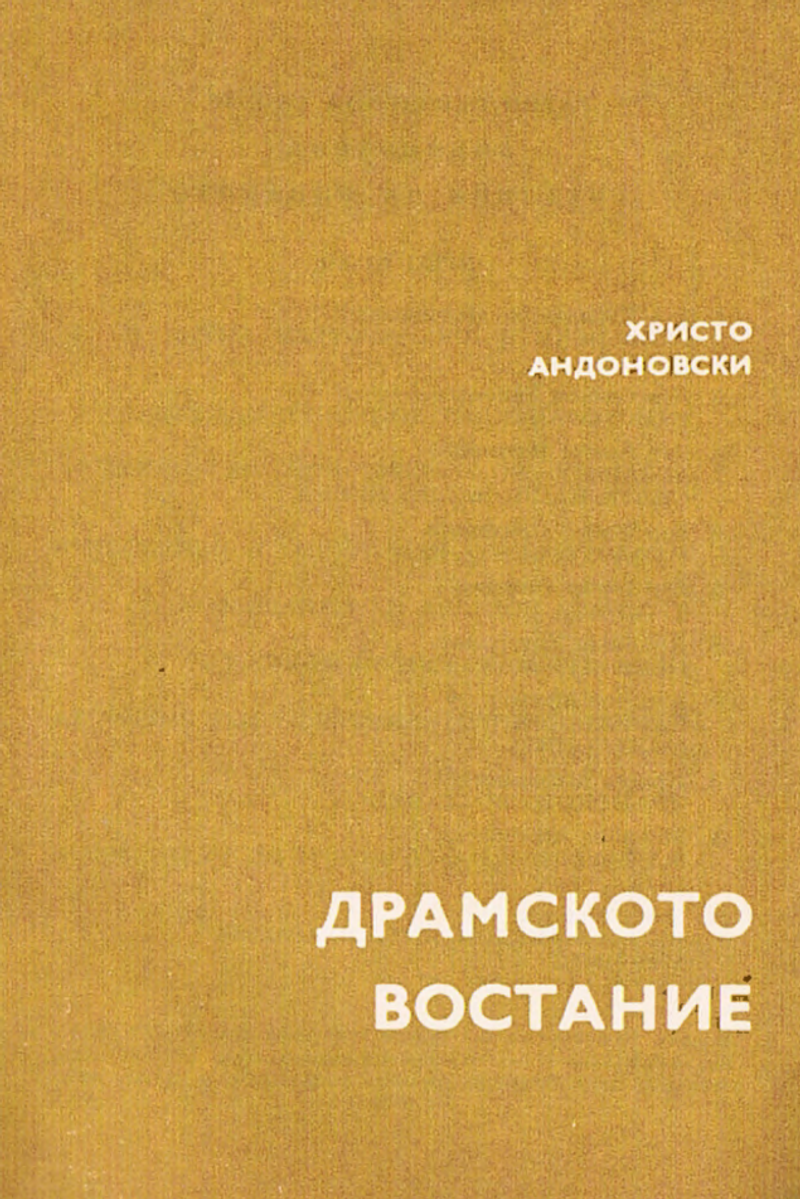
The Drama Uprising
More by Hristo Andonovski

Access Book
Description
The Drama Uprising by Hristo Andonovski examines the anti-fascist revolt in the Drama region of Aegean Macedonia in September 1941 within the broader context of Axis occupation and wartime repression. The opening chapters reconstruct the political situation following the April 1941 invasion, describing Bulgarian occupation policies, economic exploitation, and measures of forced assimilation and denationalization directed at the local Macedonian population. The author situates the uprising within rising social tension, partisan organization, and the influence of communist resistance networks operating across the region.
The central narrative analyzes the preparation, outbreak, and suppression of the uprising between 28 and 29 September 1941. Andonovski describes the formation of local partisan detachments, their attacks on police and administrative centers, and the temporary establishment of revolutionary authority in towns such as Prosotsani and surrounding villages. Particular emphasis is placed on the participation of local villagers, miners, and youth organizations, presenting the revolt as a mass anti-fascist and liberation movement rather than an isolated action. The study also details the violent reprisals carried out by Bulgarian military and police forces, including executions, destruction of settlements, and mass civilian casualties.
The publication provides a historiographical interpretation of the Drama events based on archival materials, testimonies, and contemporary press reports. Written within postwar Macedonian historical scholarship, it integrates military narrative with political analysis and addresses competing interpretations, including Greek historiographical perspectives (pp. 24–28). As a focused historical study, the booklet serves as a source for examining the early phase of armed resistance in Aegean Macedonia and the broader dynamics of occupation, repression, and anti-fascist mobilization during the Second World War.
About the Author
Author
Hristo Andonovski(1917 - 2006)