1968
Macedonian
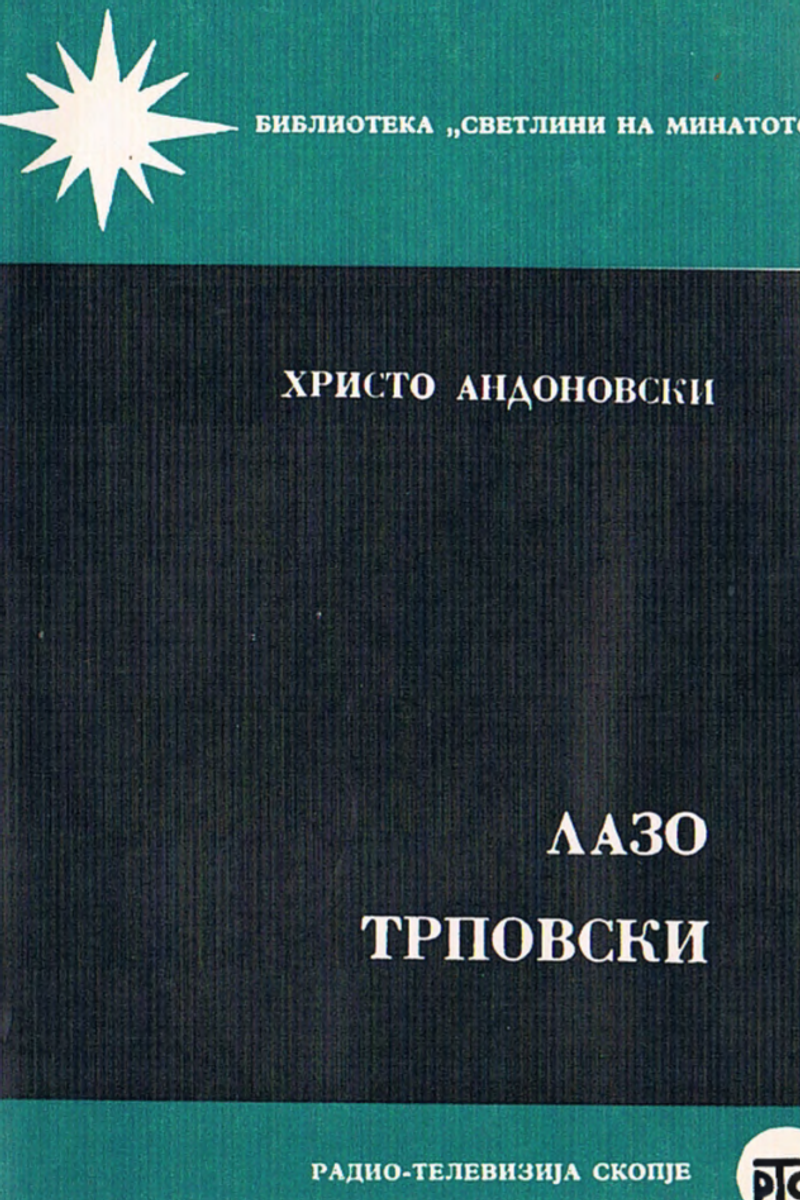
Lazo Trpovski
More by Hristo Andonovski

More by Voislav Kuševski

More by Dimče Najdevski

More by Slavko Dimevski


Access Book
Description
Lazo Trpovski by Hristo Andonovski is a biographical-historical study presenting the life of a Macedonian revolutionary activist whose political development unfolded within the complex conditions of interwar Aegean Macedonia. The work opens with his childhood in the Kostur region, portraying a social environment marked by economic hardship, national discrimination, and the emergence of labor and communist movements. Andonovski presents Trpovski’s early radicalization as a process shaped by workers’ struggles, anti-fascist convictions, and engagement with underground political networks across the Balkans and the diaspora.
A central part of the book explores Trpovski’s political activism, imprisonment, and international experience, including his time in Greece, Canada, and the Soviet Union. The narrative highlights his role in organizing Macedonian workers and political emigrants, his participation in communist structures, and his continued advocacy for the recognition of Macedonian national distinctiveness. Particular attention is given to his return during the Second World War, when he became involved in building resistance networks and encouraging armed struggle against occupation forces, presenting him as a committed organizer and ideological motivator within the liberation movement.
The final chapters follow his activities in the partisan struggle and his death in 1943, portraying the event as a major loss for the resistance in Western and Aegean Macedonia. The study combines memoir-based narrative with documentary elements to reconstruct Trpovski’s revolutionary trajectory and situate it within broader developments of the Macedonian liberation movement during the war. As a biographical source, the publication contributes to understanding cross-border activism, communist underground structures, and the formation of partisan organization in Macedonian-populated regions of the Balkans.
About the Authors
Author
Hristo Andonovski(1917 - 2006)
Institution
Radio Television Skopje(1944)