2013
English
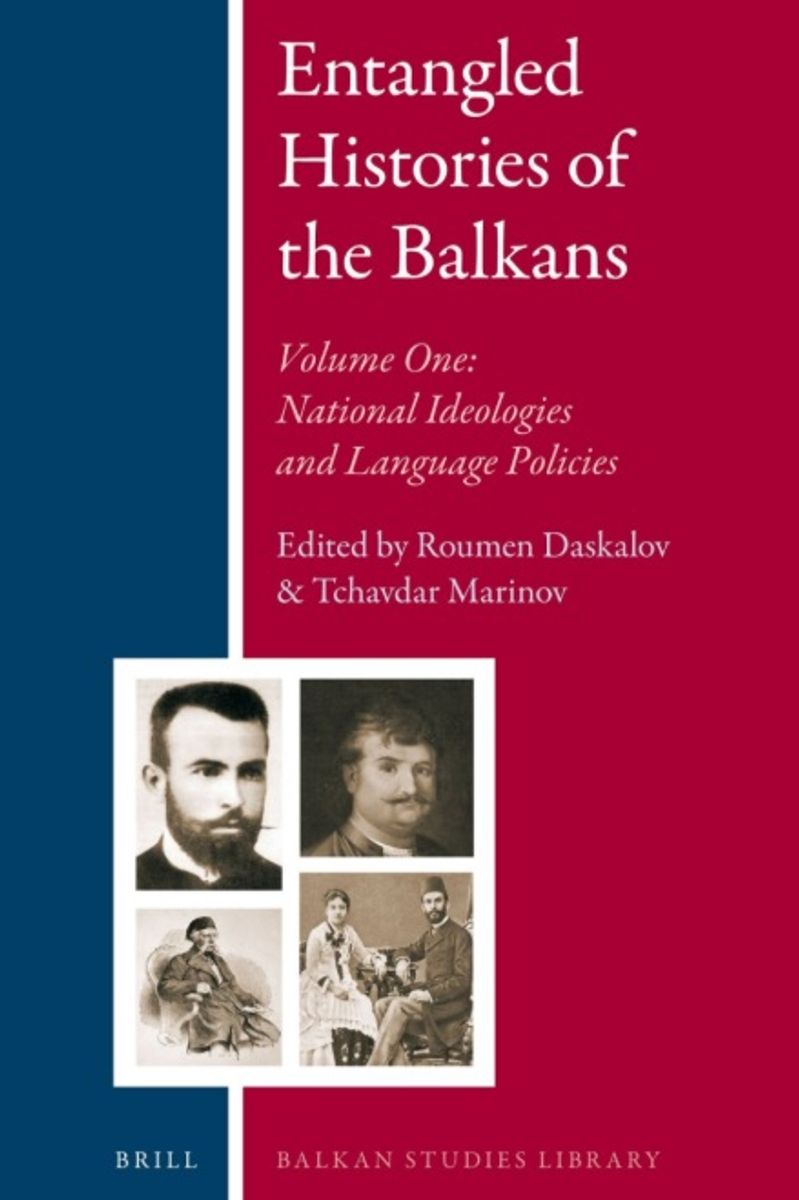
Entangled Histories of the Balkans, Vol. 1: National Ideologies and Language Policies
More by Tchavdar Marinov


Access Book
Note
This work has been sourced from the Internet Archive website. The materials are used for scholarly, educational, and cultural-historical purposes, in support of the preservation, study, and promotion of Macedonian cultural heritage.
Description
This volume explores the formation of national ideologies and language policies in the Balkans from the 19th century onward, emphasizing the region’s interconnected and overlapping historical developments. Rather than treating Balkan nations as isolated entities, the book examines how their national ideas evolved in dialogue and often in conflict with one another.
The essays focus on key aspects of nation-building, such as the creation of national languages, educational systems, historiographies, and myths of origin. Contributors analyze how language and history were used as tools to construct and legitimize national identities in the Balkans.
A central theme is the mutual borrowing, rivalry, and adaptation among Balkan national movements, especially in defining language norms and promoting national consciousness. The volume also addresses the impact of empires, modernization, and European political thought on shaping Balkan nationalism.
Overall, the book provides a comparative, transnational perspective on how national ideologies and language policies became key instruments in the Balkan struggle for identity, power, and cultural dominance, revealing a complex web of shared influences and contested narratives.
About the Authors
Author
Roumen Daskalov is a Bulgarian historian and former university professor of modern history at the New Bulgarian University in Sofia, and a recurrent visiting professor at the Central European University in Budapest. He earned his MA and PhD at St. Kliment Ohridski University of Sofia.
Throughout his academic career, he has held multiple international fellowships and research appointments in Florence, Oxford, Princeton, Maryland, and Berlin, and has also received an Advanced Grant from the European Research Council. He is the author of ten books and has published over fifty scholarly works.
His research focuses on modernization, modern social history, and the historiography of Bulgaria and the Balkans, with particular attention to grand national narratives from the National Revival through the post-communist period.
Author
Tchavdar Marinov(1974)
Tchavdar Marinov is a Bulgarian historian whose research focuses on nationalism, identity politics, and the modern history of Southeast Europe, with particular attention to the historiography of the Macedonian Question and heritage politics in the Balkans.
He is a researcher at the Bulgarian Academy of Sciences (Institute of Philosophy and Sociology) and was trained in philosophy at Sofia University and in history and civilizations at the EHESS in Paris. Marinov is the author of the monograph La Question macédonienne de 1944 à nos jours: Communisme et nationalisme dans les Balkans (2010; later developed into the Macedonian-language study The Macedonian Question from 1944 to the Present).
He has also co-edited major academic volumes, including Entangled Histories of the Balkans, Volume One: National Ideologies and Language Policies (with Roumen Daskalov).