2014
English
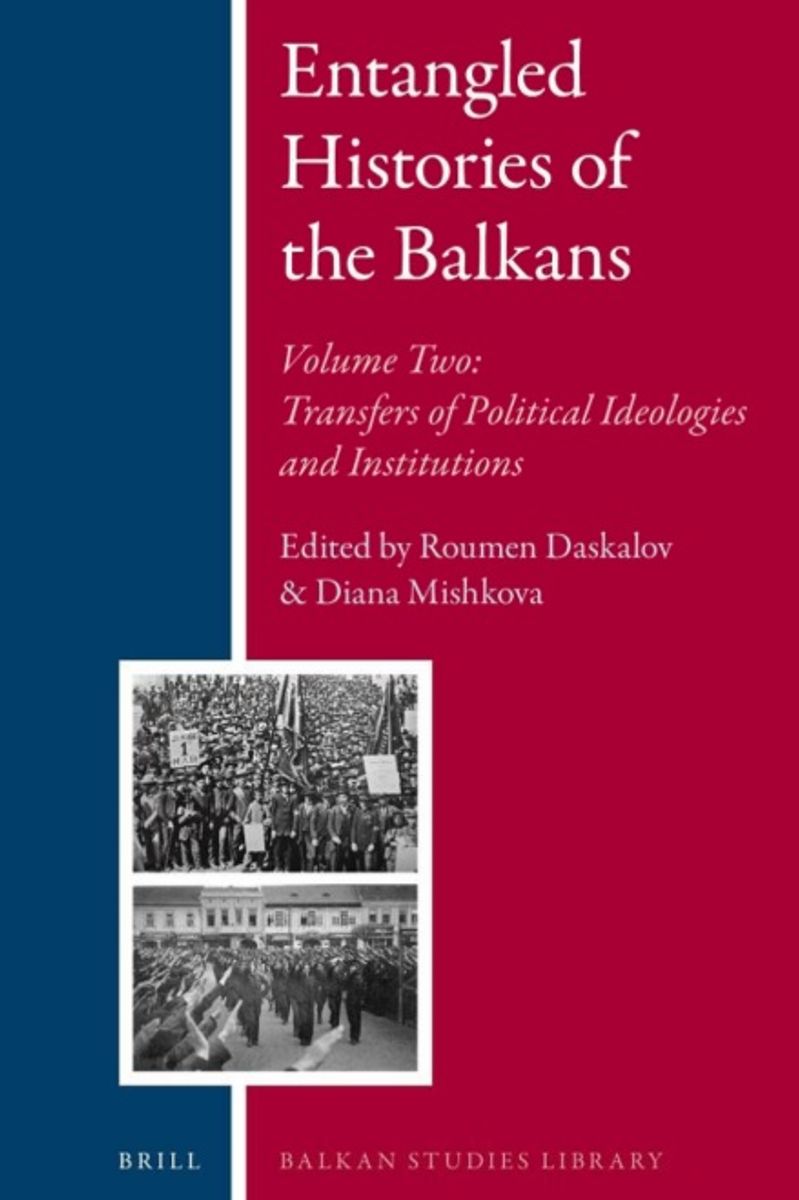
Entangled Histories of the Balkans, Vol. 2: Transfers of Political Ideologies and Institutions


Access Book
Note
This work has been sourced from the Internet Archive website. The materials are used for scholarly, educational, and cultural-historical purposes, in support of the preservation, study, and promotion of Macedonian cultural heritage.
Description
Entangled Histories of the Balkans, Vol. 2: Transfers of Political Ideologies and Institutions (ed. Roumen Daskalov & Diana Mishkova, Brill, 2013) explores how political ideas, movements, and institutions traveled across the Balkans from the 19th to the 20th century, and how they were adapted, transformed, and localized rather than simply copied.
The introduction presents the concept of “entanglement”, a web of mutual influences rather than isolated national histories. Individual chapters examine Balkan liberalisms, showing multiple regional variations; early socialism, highlighting the selective adoption of socialist doctrines; agrarian ideologies and peasant movements, tracing their roots and cross-border exchanges; fascism in Southeastern Europe, comparing movements like the Romanian Legion and Croatian Ustaša; and the complex ties between communism and nationalism, revealing both cooperation and tension.
Overall, the book argues that the region’s modern political landscape was shaped by constant transfers of ideology through translation, negotiation, and creative adaptation, making the Balkans an active contributor to, not just a recipient of, European political thought.
About the Author
Author
Roumen Daskalov is a Bulgarian historian and former university professor of modern history at the New Bulgarian University in Sofia, and a recurrent visiting professor at the Central European University in Budapest. He earned his MA and PhD at St. Kliment Ohridski University of Sofia.
Throughout his academic career, he has held multiple international fellowships and research appointments in Florence, Oxford, Princeton, Maryland, and Berlin, and has also received an Advanced Grant from the European Research Council. He is the author of ten books and has published over fifty scholarly works.
His research focuses on modernization, modern social history, and the historiography of Bulgaria and the Balkans, with particular attention to grand national narratives from the National Revival through the post-communist period.