2015
English
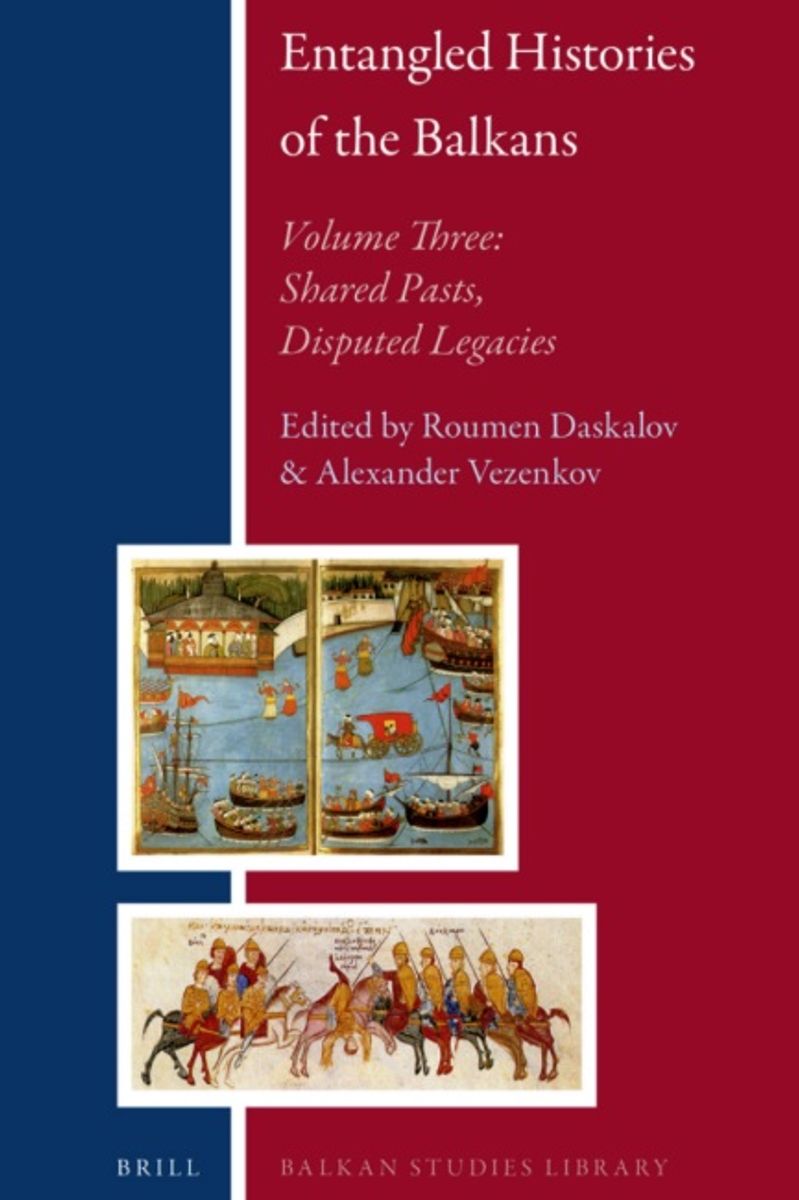
Entangled Histories of the Balkans, Vol. 3: Shared Pasts, Disputed Legacies


Access Book
Note
This work has been sourced from the Internet Archive website. The materials are used for scholarly, educational, and cultural-historical purposes, in support of the preservation, study, and promotion of Macedonian cultural heritage.
Description
This volume explores the complex, interconnected histories of the Balkan region, focusing on how shared experiences and historical legacies have been interpreted, claimed, or contested by different national narratives. Rather than presenting the Balkans as a patchwork of isolated national histories, the book emphasizes entanglement, showing how political, cultural, and intellectual developments in one country influenced or mirrored those in others.
The essays cover a wide range of topics, including historiography, national identity formation, the role of religion, and cultural exchanges. Special attention is given to how memory, myth, and historical interpretation have shaped relations among Balkan peoples, often leading to conflicting claims over heritage and identity.
Volume Three particularly focuses on disputed legacies, such as the Ottoman past, the role of empire, and the overlapping claims to figures, events, and traditions that multiple Balkan nations see as part of their own national story.
Overall, the book provides a comparative and transnational perspective that challenges nationalist frameworks, showing that the history of the Balkans is deeply interwoven, often in ways that defy simple categorization or ownership. It is a valuable resource for understanding the region’s shared yet contested pasts.
About the Author
Author
Roumen Daskalov is a Bulgarian historian and former university professor of modern history at the New Bulgarian University in Sofia, and a recurrent visiting professor at the Central European University in Budapest. He earned his MA and PhD at St. Kliment Ohridski University of Sofia.
Throughout his academic career, he has held multiple international fellowships and research appointments in Florence, Oxford, Princeton, Maryland, and Berlin, and has also received an Advanced Grant from the European Research Council. He is the author of ten books and has published over fifty scholarly works.
His research focuses on modernization, modern social history, and the historiography of Bulgaria and the Balkans, with particular attention to grand national narratives from the National Revival through the post-communist period.