1968
Macedonian
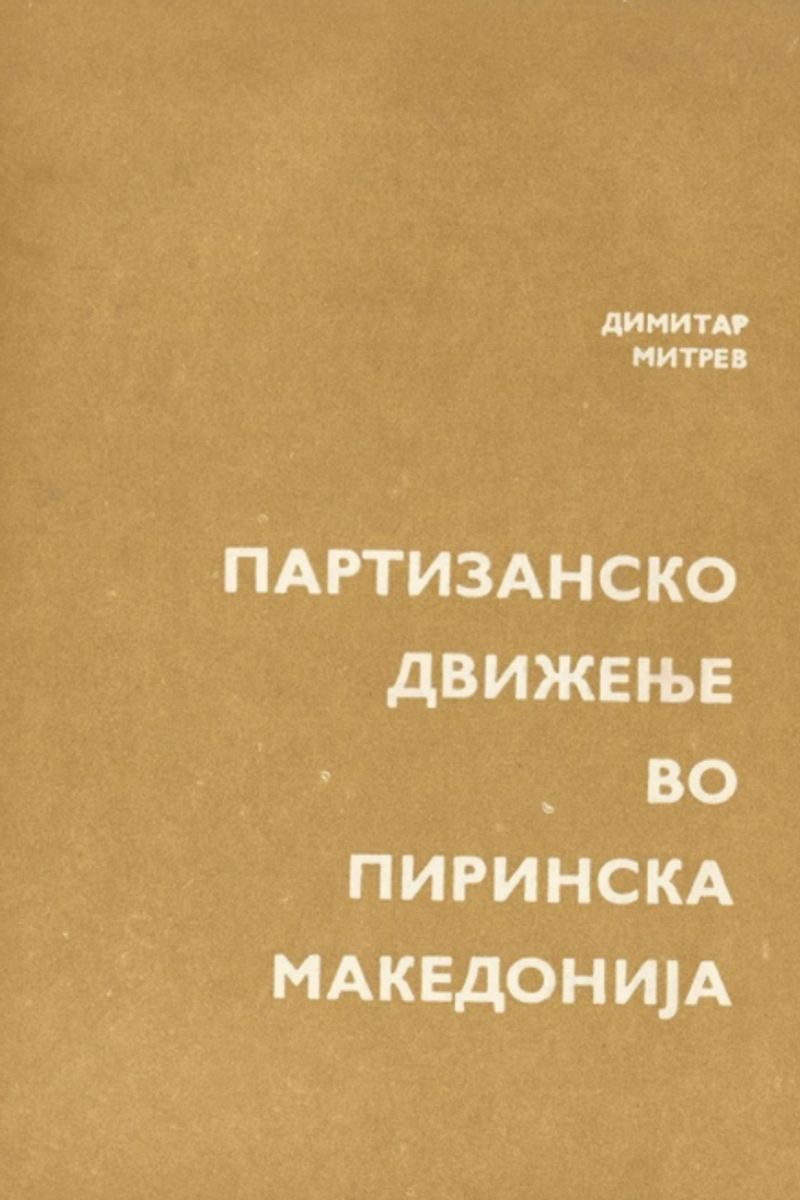
The Partisan Movement in Pirin Macedonia
More by Voislav Kuševski

More by Dimče Najdevski

More by Slavko Dimevski

More by Hristo Andonovski


Access Book
Description
The Partisan Movement in Pirin Macedonia by Dimitar Mitrev examines the emergence of organized resistance in Pirin Macedonia during the early years of the Second World War. The opening part traces earlier revolutionary traditions and the social conditions that prepared the ground for armed struggle, presenting the anti-fascist movement as rooted in local discontent, workers’ activism, and earlier revolutionary experience.
A central part analyzes the formation of partisan groups, armed actions, and political organization, highlighting figures such as Nikola Parapunov and Ivan Kozarev and describing the spread of sabotage, village support networks, and underground structures. The narrative portrays the movement as gradually expanding despite repression, arrests, and military operations, with 1943 marking a turning point toward broader mobilization and coordinated resistance.
The study situates the Pirin partisan struggle within wider Balkan anti-fascist developments and emphasizes its links with movements in Vardar and Aegean Macedonia. As a historical account, the publication provides insight into the dynamics of local resistance, cross-border revolutionary cooperation, and the role of partisan activity in shaping political expectations and postwar developments in Pirin Macedonia.
About the Authors
Author
Dimitar Mitrev(1919 - 1976)
Institution
Radio Television Skopje(1944)